

Hey there! As a supplier of Quartz Ceramic Tubes, I often get asked about the thermal diffusivity of these nifty tubes. So, let's dive right in and explore what thermal diffusivity is and how it relates to quartz ceramic tubes.
First off, what the heck is thermal diffusivity? Well, in simple terms, thermal diffusivity is a measure of how quickly heat can spread through a material. It's like how fast a rumor spreads through a small town. A high thermal diffusivity means heat can zip through the material rapidly, while a low one means it takes its sweet time.
Mathematically, thermal diffusivity (α) is defined by the formula α = k / (ρ * c_p), where k is the thermal conductivity, ρ is the density, and c_p is the specific heat capacity at constant pressure. Thermal conductivity tells us how well a material conducts heat, density is how much mass is packed into a given volume, and specific heat capacity is the amount of heat needed to raise the temperature of a unit mass of the material by one degree.
Now, let's talk about quartz ceramic tubes. Quartz is a pretty amazing material. It's made up of silicon dioxide (SiO₂), and it has some great properties. One of the reasons quartz ceramic tubes are so popular is their high thermal stability. They can withstand really high temperatures without melting or deforming too much.
When it comes to thermal diffusivity, quartz ceramic tubes have a relatively high value. This is because quartz has a decent thermal conductivity. The silicon - oxygen bonds in quartz allow heat to be transferred through the lattice structure. And since the density of quartz is relatively low and its specific heat capacity is in a range that contributes to a good overall thermal diffusivity value.
A high thermal diffusivity in quartz ceramic tubes is super useful in a bunch of applications. For example, in industries where rapid heating or cooling is required. Think about the semiconductor industry. In semiconductor manufacturing processes, precise and fast temperature changes are often necessary. Quartz ceramic tubes can quickly transfer heat, which helps in achieving those rapid temperature shifts accurately.
Another area where quartz ceramic tubes shine is in high - temperature furnaces. These tubes can efficiently distribute heat throughout the furnace, ensuring a more uniform temperature. This is crucial for processes like heat - treating metals, where an uneven temperature can lead to defects in the final product.
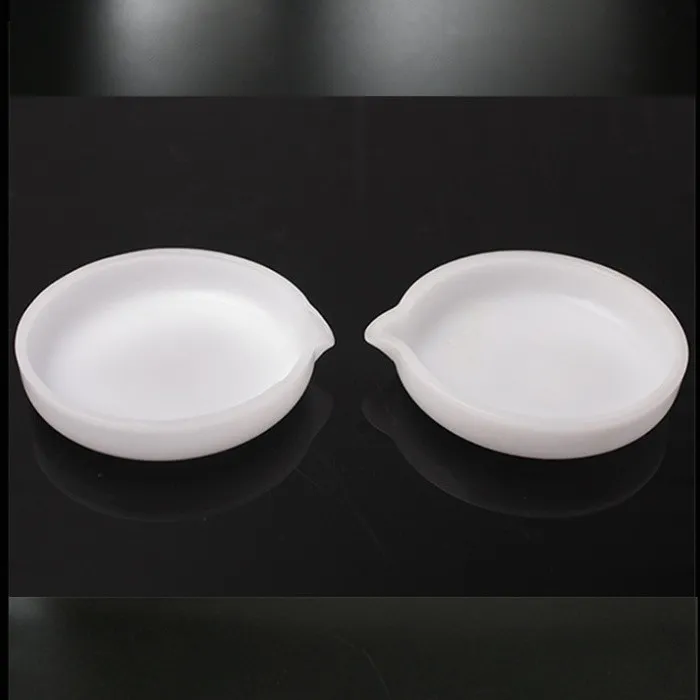
If you're in the market for high - quality quartz ceramic tubes, you might also be interested in some related products. We also offer Milky Quartz Crucible. These crucibles are great for melting and holding high - temperature materials. They have similar thermal properties to the quartz ceramic tubes, which means they can handle the heat well and transfer it efficiently.
Our Quartz Crucible is another popular item. It's often used in laboratories and industrial settings for chemical reactions and melting processes. The high thermal diffusivity of the quartz material ensures that the reactants are heated evenly, leading to more consistent results.
And then there's the Quartz Light Guide Rod. While its main function is to guide light, the thermal properties of quartz also play a role. In some applications where the light guide rod might be exposed to heat, its thermal diffusivity helps in dissipating that heat, preventing damage to the rod.
So, if you're involved in any industry that requires materials with good thermal properties, quartz ceramic tubes are definitely worth considering. Whether you're in the semiconductor, metal - working, or laboratory field, these tubes can offer you the performance you need.

If you're interested in purchasing quartz ceramic tubes or any of our related products, I'd love to have a chat with you. We can discuss your specific requirements, the quantity you need, and get you the best possible deal. Feel free to reach out and start a conversation about how our products can fit into your operations.
References
- "Quartz and Quartz - Based Materials" by some material science textbook.
- Industry reports on semiconductor manufacturing processes and the use of quartz components.
- Research papers on the thermal properties of silicon dioxide materials.