


Was established in 1998 and established three branch factories in 2006. Equipped with advanced production equipment such as ball mills and firing kilns, the company employs dozens of experienced technicians responsible for drawing review, sample preparation, and production process management.
Ceramic Products
Mainly produces a variety of industrial ceramics, including structural ceramics, functional ceramics, tool ceramics, high-strength ceramics, high-temperature ceramics, composite structural ceramics, electrical and electronic ceramics, environmentally friendly ceramics, medical ceramics, and semiconductor ceramics.
High-Temperature Glass Products
Mainly produces borosilicate glass and quartz glass, which can be made into pipes, rods, and plates.
Crucibles and bell jars: Used for heating and melting metals and chemical raw materials.
Lamp Manufacturing: Used to produce various custom-shaped lampshades and protective components.
Quartz glass fiber and quartz wool: Used for filtration, insulation, and electrical insulation.
Other High-Temperature Materials.
Metal Materials: Nickel-based alloys, chromium-based alloys, molybdenum-based alloys
Composites: Aluminum-based composites, carbon fiber composites, ceramic-based composites
Heating Elements: PTC ceramics, MCH ceramics, electric heating films, microwave heating elements
Product Applications
Ceramic Materials
Used in energy, aerospace, machinery manufacturing, automotive parts, electronic components, and chemical equipment.
Quartz Glass
Commonly used in industries such as semiconductor manufacturing, aerospace, optical equipment, optical communication systems, photovoltaic modules, and electric light sources.
Borosilicate Glass
Used in electronic products, household appliances, lighting, instrumentation, transportation, medical equipment, architectural decoration, household utensils, laboratory equipment, the photovoltaic industry, the nuclear industry, and the aerospace and military sectors.
Metal and Composite Materials
Used in building structures, electrical conduits, aircraft and automobile parts, bridges and tracks, circuit systems, precision instruments, and mechanical equipment.
Production Equipment
Ceramic Materials
Equipped with air compressors, ball mills, firing kilns, polishers, grouting machines, and other equipment for raw material processing, molding, sintering, and surface treatment.
Glass Products
We utilize equipment such as glass tempering furnaces, hot bending furnaces, cleaning machines, edge grinders, and polishers for heat forming, cleaning, and edge grinding.
Metal and Composite Materials
We utilize equipment such as pit furnaces, kiln furnaces, trolley furnaces, continuous heat treatment lines, and induction cookers for heat treatment processes such as annealing, quenching, and tempering.
Our products are sold to a wide range of regions worldwide, including East Asia, Southeast Asia, South Asia, Central Asia, West Asia, North Africa, Sub-Saharan Africa, Eastern Europe, Western Europe, North Asia, North America, Latin America, and Oceania. In recent years, the company's annual sales have maintained approximately 15% growth, reaching a record high of 880 million yuan in 2023.

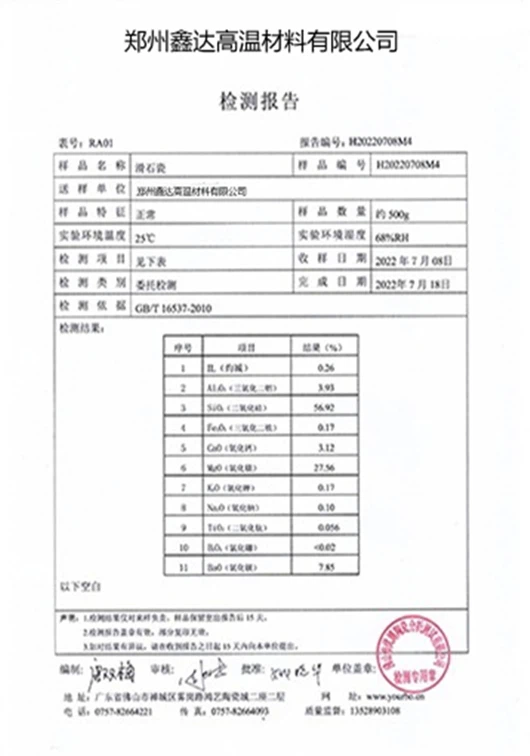
Our Certificates
We possess numerous test reports and certifications, including CE certification, electrical safety LVD verification, and material and performance testing, demonstrating that our products meet standard requirements for high-temperature resistance, electrical insulation, strength, purity, and hazardous substance limits.




Pre-Sales Service
Receive customer drawings or requirements → Analyze specific needs → Prepare product proposals and communication materials → Communicate with the customer → Confirm samples → Arrange production and delivery after samples are approved.
Post-Sales Service
After the customer places an order → Arrange normal production and delivery → Cooperate with the customer in product testing, quality inspection, and certification processes → Contact the customer at any time if they encounter any issues → Respond to questions and provide solutions → Communicate with the customer to identify new requirements → Adjust product or service content if necessary.
After-Sales Service
Collect customer information and archive it for future reference;
Provide product instructions and precautions;
When a customer reports an issue, understand the on-site situation and provide solutions;
Register customer contact information, analyze the problem, prepare a solution, and send it along with a workaround;
Verify the product on-site. If any errors are identified, re-analyze and propose solutions;
Collect common issues and hand them over to the technical, quality inspection, and production departments for product or process modifications.