

The porosity of a material refers to the ratio of the volume of pores in the material to the total volume of the material. It is an important physical property that can affect various characteristics of the material, such as its permeability, adsorption capacity, and mechanical strength. When it comes to a Quartz Chamber, understanding its porosity is crucial for many applications, especially in scientific research and industrial processes where the purity and integrity of the chamber environment are of utmost importance.
Understanding Quartz and Its Structure
Quartz is a crystalline form of silicon dioxide (SiO₂), one of the most abundant minerals on Earth. Its atomic structure consists of a continuous framework of SiO₄ silicon - oxygen tetrahedra, where each silicon atom is surrounded by four oxygen atoms. This highly ordered and tightly - packed structure gives quartz its characteristic hardness, chemical stability, and relatively low porosity.
In a Quartz Chamber, which is typically made from high - purity quartz glass, the manufacturing process plays a significant role in determining the final porosity. Quartz glass is produced by melting high - purity quartz crystals at extremely high temperatures (around 1700 - 2000°C). During this melting process, the original crystal structure is broken down, and upon cooling, a non - crystalline (amorphous) solid is formed.
Factors Affecting the Porosity of a Quartz Chamber
- Raw Material Purity: The purity of the quartz used to make the chamber is a key factor. Impurities in the raw material can introduce defects and pores during the melting and forming process. High - quality quartz sources with low levels of impurities are preferred to minimize porosity. For example, natural quartz that has been carefully mined and purified can result in a Quartz Chamber with lower porosity compared to lower - grade sources.
- Manufacturing Process: The method of manufacturing the Quartz Chamber also has a profound impact on porosity. Techniques such as precision molding, machining, and annealing can influence the formation and distribution of pores. For instance, rapid cooling during the manufacturing process can cause internal stresses that may lead to the formation of micro - pores. On the other hand, slow and controlled cooling can help to reduce these stresses and minimize porosity.
- Surface Treatment: Surface treatment processes, such as polishing and etching, can also affect the apparent porosity of the Quartz Chamber. Polishing can remove surface - level pores and create a smoother surface, while etching can expose or modify existing pores. However, improper surface treatment can potentially increase porosity if it causes damage to the surface structure.
Measuring the Porosity of a Quartz Chamber
There are several methods available for measuring the porosity of a Quartz Chamber. One common approach is the gas adsorption method, which involves measuring the amount of gas adsorbed onto the surface of the chamber material at a specific temperature and pressure. By analyzing the adsorption isotherm, the pore size distribution and total porosity can be determined.

Another method is mercury intrusion porosimetry. In this technique, mercury is forced into the pores of the material under increasing pressure. The volume of mercury intruded at each pressure step is measured, and from this data, the pore size distribution and porosity can be calculated.
Implications of Porosity in a Quartz Chamber
- Contamination Risk: Porosity in a Quartz Chamber can pose a significant contamination risk. Pores can trap foreign substances, such as dust, moisture, and chemical contaminants. In applications where high - purity environments are required, such as semiconductor manufacturing or analytical chemistry, even a small amount of contamination can have a detrimental effect on the results. For example, in a semiconductor cleanroom, a contaminated Quartz Chamber can lead to defects in the semiconductor wafers being processed.
- Gas Permeation: Porous Quartz Chambers may allow gas permeation. This can be a problem in applications where a specific gas atmosphere needs to be maintained inside the chamber. For instance, in a gas - sensing experiment, if the chamber allows the permeation of the target gas, it can affect the accuracy of the sensor readings.
- Mechanical Strength: Porosity can also affect the mechanical strength of the Quartz Chamber. Pores act as stress concentrators, which can reduce the overall strength of the material and make it more susceptible to cracking and breakage. This is particularly important in applications where the chamber is subjected to mechanical stress, such as in high - pressure or high - vibration environments.
Our Quartz Chamber Products and Low Porosity Advantage
As a leading supplier of Quartz Chambers, we are committed to providing products with extremely low porosity. Our manufacturing process combines state - of - the - art technology with strict quality control measures to ensure the highest level of purity and integrity.
We start with only the purest quartz raw materials, carefully selected from trusted sources. Our advanced melting and forming techniques are designed to minimize the formation of pores during the manufacturing process. Additionally, we perform rigorous quality inspections using the latest porosity measurement methods to guarantee that our Quartz Chambers meet the strictest industry standards.

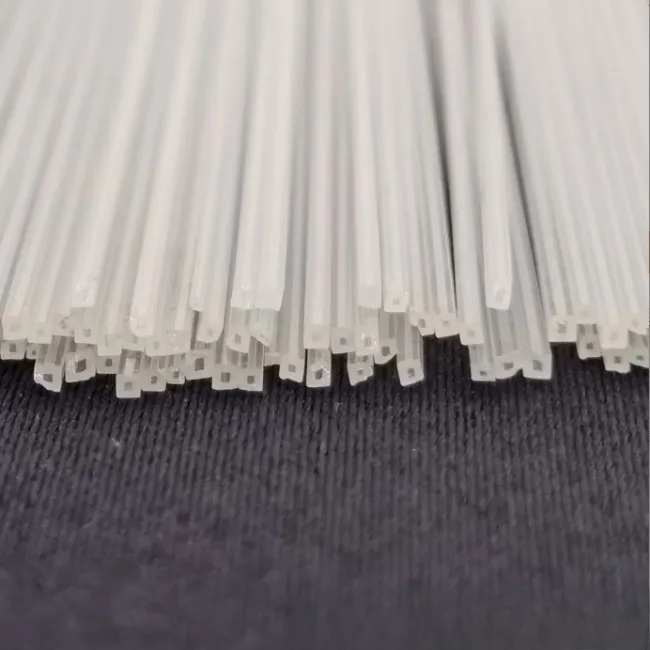
In addition to our Quartz Chambers, we also offer a range of other high - quality quartz glass products, such as Quartz Square Capillary, Quartz Glass Mixing Stick, and Quartz Glass Beakers. These products are also manufactured with the same attention to detail and quality, ensuring low porosity and excellent performance.
Contact Us for Your Quartz Chamber Needs
If you are in need of a high - quality Quartz Chamber with low porosity for your specific application, we invite you to contact us. Our team of experts is ready to assist you in selecting the right product and providing you with all the necessary information. Whether you are involved in scientific research, industrial manufacturing, or any other field that requires a reliable Quartz Chamber, we can offer you the best solutions.
References
- Brinker, C. J., & Scherer, G. W. (1990). Sol - gel science: The physics and chemistry of sol - gel processing. Academic press.
- Iler, R. K. (1979). The chemistry of silica: Solubility, polymerization, colloid and surface properties, and biochemistry. John Wiley & Sons.
- Lowell, S., Shields, J. E., Thomas, M. A., & Thommes, M. (2004). Characterization of porous solids and powders: Surface area, pore size and density. Springer.