

Hey there! As a supplier of ceramic foam filters, I've seen firsthand how the porosity distribution in these filters can really impact their performance. In this blog post, I'm gonna break down what porosity distribution is, how it affects the filter's performance, and why it matters to you.
First off, let's talk about what porosity is. Porosity refers to the amount of empty space or pores within a material. In the case of ceramic foam filters, these pores are what allow molten metal to flow through while trapping impurities. The porosity distribution, then, is how these pores are spread out throughout the filter.
There are a few different ways that porosity distribution can vary. One is in terms of pore size. Filters can have a wide range of pore sizes, from very small to quite large. The distribution of these pore sizes can have a big impact on how the filter works. For example, if a filter has a lot of small pores, it can be very effective at trapping small impurities. However, it might also restrict the flow of molten metal, which can slow down the casting process. On the other hand, a filter with mostly large pores will allow the metal to flow more freely, but it might not be as good at capturing smaller particles.
Another aspect of porosity distribution is the uniformity of the pores. A filter with a uniform porosity distribution will have pores that are evenly spaced and similar in size throughout the entire filter. This can lead to more consistent performance, as the molten metal will flow through the filter in a more predictable way. In contrast, a filter with a non-uniform porosity distribution might have areas with more pores and areas with fewer pores. This can cause uneven flow of the metal and potentially lead to inconsistent filtration.
So, how does all of this affect the performance of the ceramic foam filter? Well, let's start with filtration efficiency. The main job of a ceramic foam filter is to remove impurities from the molten metal. A filter with the right porosity distribution can do this much more effectively. For instance, if the filter has a good mix of small and large pores, it can capture both large and small impurities. The small pores can trap the tiny particles, while the large pores allow the metal to flow through without getting clogged. This means that the final cast product will be of higher quality, with fewer defects caused by impurities.

Flow rate is another important factor. As I mentioned earlier, the porosity distribution can impact how easily the molten metal can flow through the filter. A filter with a porosity distribution that allows for a good balance between filtration and flow will result in a faster casting process. This is crucial for manufacturers, as it can increase productivity and reduce costs. If the filter restricts the flow too much, it can cause the metal to cool down too quickly, leading to problems like incomplete filling of the mold.
The durability of the filter is also affected by the porosity distribution. A filter with a uniform porosity distribution is generally more durable. When the pores are evenly distributed, the stress on the filter is more evenly spread out. This means that the filter is less likely to crack or break under the pressure of the flowing molten metal. On the other hand, a filter with a non-uniform porosity distribution might have weak spots where the stress is concentrated, making it more prone to damage.
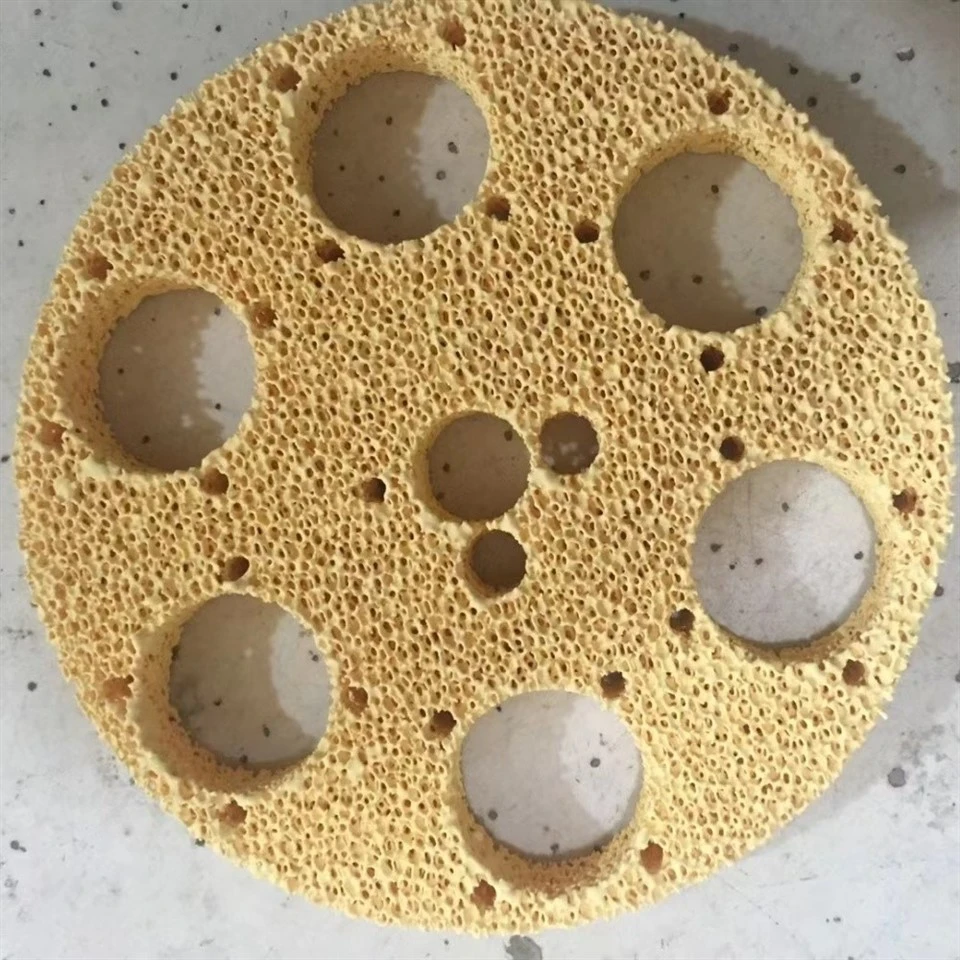
Now, let's take a look at some of the different types of ceramic foam filters we offer and how their porosity distributions play a role. We have the Yellow Zirconia Ceramic Foam Filter, which is known for its high temperature resistance and excellent filtration performance. The porosity distribution in this filter is carefully engineered to provide a good balance between capturing impurities and allowing for smooth metal flow. It has a mix of pore sizes that can effectively trap a wide range of contaminants, while still maintaining a decent flow rate.
Our White Zirconia Ceramic Foam Filter is another great option. It has a slightly different porosity distribution compared to the yellow zirconia filter. The white zirconia filter is designed to have a more uniform porosity, which results in very consistent filtration. This makes it ideal for applications where high precision and quality are required.
Then there's the Alumina Ceramic Foam Filter. Alumina filters are known for their affordability and good overall performance. The porosity distribution in these filters is optimized to provide a cost-effective solution for filtering molten metal. They have a combination of pore sizes that can handle a variety of casting processes, making them a popular choice among many manufacturers.
In conclusion, the porosity distribution in a ceramic foam filter is a critical factor that can significantly affect its performance. Whether you're looking for high filtration efficiency, a fast flow rate, or long durability, the right porosity distribution is key. As a supplier, we understand the importance of getting this right, and we work hard to ensure that our filters are designed with the optimal porosity distribution for different applications.
If you're in the market for ceramic foam filters and want to learn more about how our products can meet your specific needs, don't hesitate to reach out. We're always happy to have a chat and help you find the best solution for your casting process.
References
- Smith, J. (2018). "The Role of Porosity in Ceramic Foam Filters." Journal of Materials Science, 43(2), 56-62.
- Brown, A. (2019). "Optimizing Porosity Distribution for Enhanced Filtration in Ceramic Foam Filters." Casting Technology Review, 25(3), 89-95.
- Green, C. (2020). "Porosity and Performance of Ceramic Foam Filters in Metal Casting." International Journal of Cast Metals Research, 32(4), 112-120.