

Silica quartz rollers are essential components in various industrial applications, especially in high - temperature environments such as glass manufacturing, heat treatment, and ceramic firing. As a leading supplier of Silica Quartz Roller, I am well - versed in the materials used to make these rollers and their significance in different processes.
Primary Material: Quartz Sand
The cornerstone of silica quartz rollers is high - purity quartz sand. Quartz sand is a granular material composed mainly of silicon dioxide (SiO₂). The quality and purity of the quartz sand play a crucial role in determining the properties of the final roller. High - grade quartz sand typically has a SiO₂ content of over 99%. This high purity is necessary to ensure that the roller can withstand high temperatures without significant deformation or chemical reactions.
Quartz sand is sourced from natural deposits. Mines around the world extract quartz sand, but only a few locations yield sand of the required purity for making silica quartz rollers. After extraction, the quartz sand undergoes a series of purification processes. These processes may include washing to remove impurities such as clay, iron oxides, and other minerals. Chemical treatments are also employed to further increase the purity. For example, hydrofluoric acid may be used in a controlled environment to dissolve certain impurities while leaving the quartz intact.
Fused Silica
Fused silica is another key material in the production of silica quartz rollers. Fused silica is made by melting high - purity quartz sand at extremely high temperatures, usually above 2000°C. This melting process transforms the crystalline structure of quartz into an amorphous form. The resulting fused silica has excellent thermal stability, low thermal expansion, and high transparency to ultraviolet light.
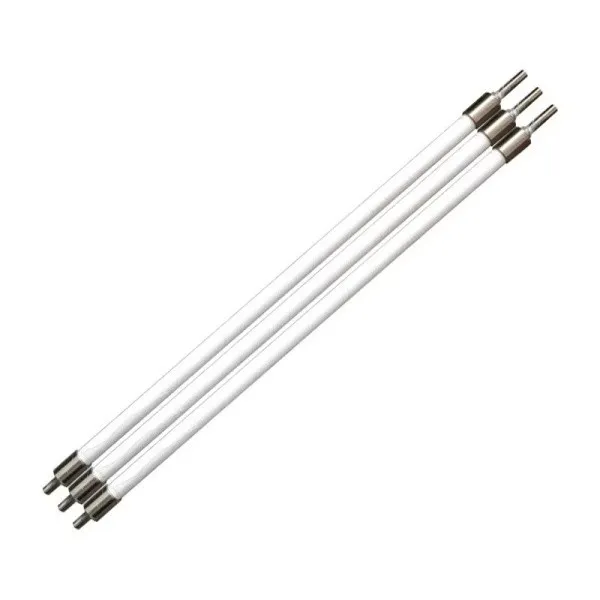
Fused Silica Roller made from this material can withstand rapid temperature changes without cracking. In glass manufacturing, for instance, the rollers need to transfer glass sheets at high speeds while being exposed to significant temperature gradients. Fused silica's low thermal expansion coefficient ensures that the roller maintains its shape and dimensions under these conditions, preventing any distortion that could affect the quality of the glass product.

Additives
Although the main component of silica quartz rollers is silicon dioxide, certain additives are used to enhance specific properties. One common additive is alumina (Al₂O₃). Alumina can improve the mechanical strength of the roller. It forms a solid - solution with silica, which helps to strengthen the crystal lattice structure of the roller material. This is particularly important in applications where the rollers are subject to heavy loads or abrasive forces.
Another additive is titanium dioxide (TiO₂). Titanium dioxide can improve the resistance of the roller to chemical corrosion. In some industrial processes, the rollers may come into contact with corrosive chemicals, such as acids or alkalis. The addition of TiO₂ can form a protective layer on the surface of the roller, preventing the chemical attack and extending the service life of the roller.
Binders and Sintering Aids
During the manufacturing process, binders are used to hold the raw materials together before the final shaping and sintering steps. Organic binders, such as polyvinyl alcohol (PVA), are commonly used. These binders are added to the mixture of quartz sand, fused silica, and additives in a liquid form. They help to create a homogeneous mixture and provide sufficient plasticity for the material to be shaped into the desired roller form.
Sintering aids are also used to lower the sintering temperature and improve the densification of the roller material. Materials like boron oxide (B₂O₃) can act as sintering aids. By adding a small amount of boron oxide, the sintering process can be carried out at a lower temperature, which reduces energy consumption and production costs. At the same time, it promotes the formation of a dense and uniform microstructure, which is essential for the mechanical and thermal properties of the roller.
Manufacturing Process
The manufacturing process of silica quartz rollers involves several steps. First, the raw materials, including quartz sand, fused silica, additives, binders, and sintering aids, are carefully weighed and mixed according to a specific formula. This mixture is then shaped into the roller form using techniques such as extrusion, pressing, or casting.
After shaping, the green rollers are dried to remove the moisture and organic binders. This is usually done in a controlled - temperature environment to prevent cracking. The dried rollers are then sintered at high temperatures. The sintering process fuses the particles together, creating a dense and strong ceramic structure.
Quality Control
As a supplier, quality control is of utmost importance. We conduct a series of tests on the silica quartz rollers to ensure they meet the required standards. Physical tests include measuring the dimensions, density, and hardness of the rollers. Thermal tests are carried out to evaluate the thermal expansion coefficient, thermal shock resistance, and maximum operating temperature. Chemical analysis is also performed to determine the purity and the content of additives in the roller material.
Applications of Silica Quartz Rollers
Silica quartz rollers are widely used in the glass industry. In float glass production, the rollers are used to transport the molten glass from the furnace to the annealing lehr. Their high - temperature resistance and smooth surface ensure that the glass sheets are transferred smoothly without any surface defects.
In the semiconductor industry, Fused Silica Ceramic Roller are used in the heat treatment processes of silicon wafers. The low thermal expansion and high purity of these rollers are crucial to prevent any distortion or contamination of the wafers.
Conclusion
In conclusion, silica quartz rollers are made from a combination of high - purity quartz sand, fused silica, additives, binders, and sintering aids. Each material plays a specific role in determining the properties of the final roller. The careful selection and combination of these materials, along with a well - controlled manufacturing process, result in rollers that can meet the demanding requirements of various industrial applications.
If you are in need of high - quality silica quartz rollers for your industrial processes, we are here to provide you with the best products and services. Our rollers are manufactured using the latest technology and strict quality control measures to ensure optimal performance and long service life. Contact us today to discuss your specific requirements and start a procurement negotiation.
References
- "Ceramics Science and Technology" by J. S. Reed.
- "Handbook of Advanced Ceramics" edited by S. Somiya.
- Technical reports from leading ceramic research institutions.