

Hey there! As a supplier of Quartz Crucible, I often get asked about the Young's modulus of a quartz crucible. So, I thought I'd take a moment to break it down for you in a way that's easy to understand.
First off, let's talk about what the Young's modulus actually is. In simple terms, it's a measure of how stiff a material is. You can think of it as a way to figure out how much a material will stretch or compress when you apply a force to it. The higher the Young's modulus, the stiffer the material, and the less it'll deform under stress.
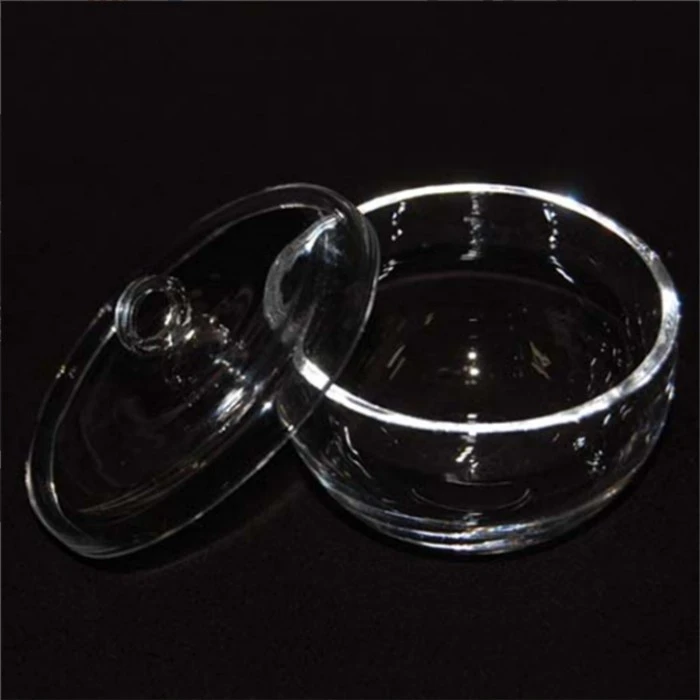
Now, when it comes to quartz crucibles, the Young's modulus is an important property. Quartz crucibles are used in a bunch of different industries, like semiconductor manufacturing, solar cell production, and even in some high - temperature chemical reactions. In these applications, the crucible needs to maintain its shape and integrity under various conditions. If it's too flexible, it might not be able to hold up the materials inside or withstand the forces applied during the process.
So, what's the Young's modulus of a quartz crucible? Well, it typically falls in the range of about 70 - 75 GPa (gigapascals). This value can vary a bit depending on the type of quartz used and the manufacturing process. For example, fused quartz crucibles, which are made by melting high - purity quartz sand, usually have a consistent Young's modulus within this range.
The reason quartz has such a relatively high Young's modulus is due to its atomic structure. Quartz is made up of silicon and oxygen atoms arranged in a very regular, three - dimensional network. These strong chemical bonds between the atoms make the material rigid and resistant to deformation. When you try to stretch or compress a quartz crucible, you're essentially trying to break or distort these bonds, which requires a significant amount of force.
Let's compare quartz crucibles with some other materials to give you a better idea of how stiff they are. Steel, which is known for its strength, has a Young's modulus of around 200 GPa. So, steel is much stiffer than quartz. On the other hand, plastics like polyethylene have a Young's modulus that can be as low as 0.1 - 1 GPa. This shows that quartz crucibles are significantly stiffer than many common plastics but not as stiff as steel.
Now, why does the Young's modulus matter in practical applications? In semiconductor manufacturing, for instance, a quartz crucible is used to hold molten silicon. The high Young's modulus ensures that the crucible doesn't deform when the molten silicon is poured in or when it's heated to very high temperatures. If the crucible were to warp or change shape, it could affect the quality of the semiconductor wafers being produced.
In solar cell production, quartz crucibles are used to grow single - crystal silicon ingots. The stable shape of the crucible, thanks to its appropriate Young's modulus, is crucial for growing high - quality crystals. Any deformation could lead to defects in the crystal structure, which would reduce the efficiency of the solar cells.
As a supplier of Quartz Crucible, we make sure to test the Young's modulus of our products regularly. We use advanced testing equipment to measure the deformation of the crucibles under controlled forces. This helps us ensure that our crucibles meet the strict requirements of our customers in different industries.
Apart from the Young's modulus, there are other properties of quartz crucibles that are also important. For example, thermal expansion coefficient is another key factor. Quartz has a very low thermal expansion coefficient, which means it doesn't expand or contract much when the temperature changes. This is important because in high - temperature applications, large thermal expansions could cause the crucible to crack or break.
We also offer other quartz products like Quartz Glass Tube and Quartz Infrared Heating Tube. These products also rely on the unique properties of quartz, including its Young's modulus, to perform well in their respective applications. Quartz glass tubes are used in laboratories for various chemical reactions and in some industrial processes. The high Young's modulus ensures that they can be used safely without deforming under normal operating conditions.
Quartz infrared heating tubes, on the other hand, are used in heating applications. The stiffness provided by the appropriate Young's modulus helps these tubes maintain their shape even when they're heated to high temperatures, ensuring efficient heat transfer.
If you're in the market for high - quality quartz crucibles or other quartz products, you've come to the right place. We've been in the business for a long time and have a team of experts who are dedicated to providing the best products. Our products are made from the highest - quality quartz materials and are manufactured using state - of - the - art processes.
Whether you're involved in semiconductor manufacturing, solar cell production, or any other industry that requires reliable quartz products, we can meet your needs. We offer a wide range of sizes and specifications for our quartz crucibles, and we can also customize products according to your specific requirements.

If you have any questions about our products, the Young's modulus, or anything else related to quartz crucibles, feel free to reach out. We're always happy to have a chat and help you find the right solutions for your business. Contact us to start a conversation about your procurement needs, and let's see how we can work together to make your projects a success.
References:
- "Introduction to Materials Science for Engineers" by James F. Shackelford
- Technical literature on quartz materials from major quartz manufacturers