

Hey there! As a supplier of Quartz Glass Beakers, I often get asked about the weight of a typical quartz glass beaker. So, I thought I'd dive into this topic and share some insights with you.

First off, let's talk a bit about quartz glass. Quartz glass is an amazing material. It's made from high - purity silica, which gives it some really cool properties. It has excellent thermal stability, can withstand high temperatures without cracking or deforming easily. It also has great chemical resistance, making it ideal for use in laboratories and various industrial applications.
Now, when it comes to the weight of a typical quartz glass beaker, it depends on a few factors. The most obvious one is the size of the beaker. Just like with regular glass beakers, larger quartz glass beakers are going to weigh more than smaller ones.
Let's start with the smaller sizes. A small quartz glass beaker, say with a capacity of 10 ml, is going to be relatively light. On average, it might weigh around 10 - 15 grams. This is because it doesn't have a lot of material in it. The walls of a quartz glass beaker are usually thin, but they're still strong enough to hold liquids and withstand normal laboratory handling.
As we move up in size, things change. A 50 ml quartz glass beaker is going to be a bit heavier. It could weigh anywhere from 25 - 35 grams. The increase in weight is due to the extra glass needed to make the larger container. The diameter and height of the beaker are greater, so there's more material overall.
For a 100 ml quartz glass beaker, you're looking at a weight in the range of 40 - 50 grams. The shape and design of the beaker also play a role here. Some beakers might have thicker walls for added durability, which will increase the weight.
If you're dealing with a 250 ml quartz glass beaker, it can weigh around 70 - 90 grams. At this size, the beaker is starting to get more substantial, and you can really feel the difference in weight compared to the smaller ones.
And for the larger 500 ml quartz glass beakers, they can weigh anywhere from 120 - 150 grams. These big beakers are used for holding larger volumes of liquids, and they need to be sturdy enough to handle the extra weight of the liquid inside.
It's important to note that these are just rough estimates. The actual weight can vary depending on the manufacturer and the specific design of the beaker. Some manufacturers might use slightly different manufacturing processes that could result in a beaker with a different weight.
Now, let's talk about why the weight of a quartz glass beaker matters. In a laboratory setting, weight can be a factor when it comes to handling and storage. Lighter beakers are easier to pick up and move around, especially if you're doing a lot of experiments. They also take up less space on the shelf and are less likely to cause damage if accidentally knocked over.
On the other hand, heavier beakers can sometimes be more stable. They're less likely to tip over when filled with liquid, which is important when you're working with valuable or dangerous chemicals.
At our company, we offer a wide range of quartz glass beakers in different sizes and weights. Whether you need a small 10 ml beaker for a delicate experiment or a large 500 ml beaker for bulk liquid storage, we've got you covered.
We also supply other quartz glass products. For example, if you're interested in Quartz Glass Flask, we have a great selection. These flasks are also made from high - quality quartz glass and are perfect for various chemical reactions and distillations.
Another product we offer is the Quartz Ultraviolet High - pressure Mercury Lamp. This lamp is used in many industries for applications like UV curing and sterilization. The quartz glass used in these lamps is specially designed to withstand the high temperatures and pressures generated by the mercury vapor.
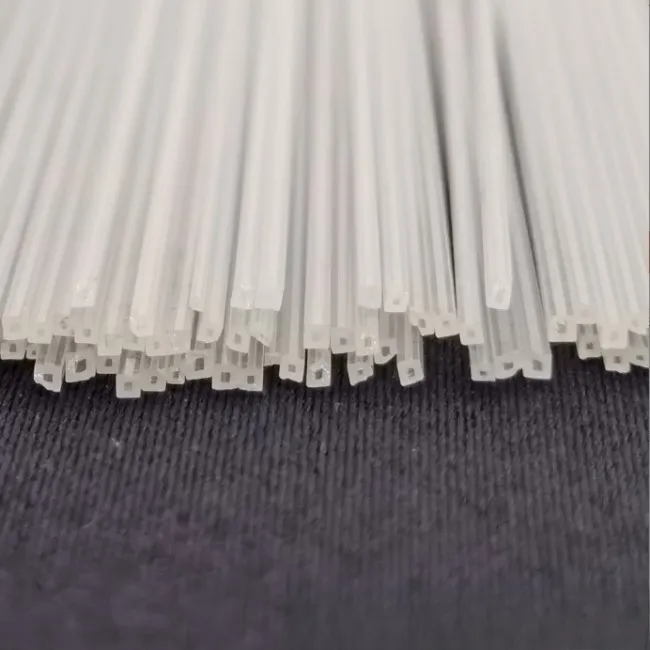
And if you're in the market for Quartz Square Capillary, we can provide that too. These capillaries are used in scientific research and analytical chemistry for precise liquid handling.
If you're thinking about purchasing quartz glass beakers or any of our other products, we'd love to hear from you. We're always happy to have a chat about your specific needs and see how we can help. Whether you're a small research lab or a large industrial facility, we can offer you the right products at competitive prices. So, don't hesitate to reach out and start a conversation about your procurement requirements.
References
- General knowledge of quartz glass properties and laboratory equipment weights from industry experience.