

Hey there! As a supplier of Quartz Chambers, I often get asked about their UV resistance. It's a crucial aspect, especially when you're considering using these chambers in various scientific and industrial applications. So, let's dive right in and explore what the UV resistance of a Quartz Chamber is all about.
What is UV Resistance?
First off, let's quickly understand what UV resistance means. UV, or ultraviolet, light is a type of electromagnetic radiation that has a shorter wavelength than visible light. It's divided into three categories: UVA, UVB, and UVC. UVA has the longest wavelength and is associated with skin aging, while UVB is shorter and can cause sunburns. UVC is the shortest and most energetic, but most of it is absorbed by the Earth's atmosphere.
UV resistance refers to a material's ability to withstand the damaging effects of UV light. When a material is exposed to UV light over time, it can cause a range of issues, such as discoloration, degradation, and reduced mechanical strength. For a Quartz Chamber, having good UV resistance is essential to ensure its long - term performance and reliability.
Why is UV Resistance Important for a Quartz Chamber?
Quartz Chambers are used in a wide variety of applications where UV light is present. For example, in the field of spectroscopy, they are used to hold samples while they are exposed to UV light for analysis. In photolithography, which is a key process in semiconductor manufacturing, Quartz Chambers are used to create precise patterns on silicon wafers using UV light.
If a Quartz Chamber doesn't have good UV resistance, it can lead to inaccurate results in spectroscopy. The degradation of the chamber due to UV exposure can change its optical properties, which in turn affects the way light interacts with the sample. In photolithography, a chamber that degrades under UV light can cause defects in the semiconductor patterns, leading to lower - quality products.
The Science Behind the UV Resistance of Quartz Chambers
Quartz is a crystalline form of silicon dioxide (SiO₂). One of the reasons why quartz has excellent UV resistance is its chemical structure. The silicon - oxygen bonds in quartz are very strong, which makes it difficult for UV photons to break these bonds and cause damage.
Moreover, quartz has a wide transparency range that extends into the UV region. This means that it can transmit UV light effectively without absorbing too much of it. When a material absorbs UV light, it converts the light energy into heat, which can cause thermal stress and damage to the material. Since quartz doesn't absorb much UV light, it doesn't experience this kind of thermal damage.
Another factor contributing to the UV resistance of quartz is its purity. High - purity quartz used in Quartz Chambers has very few impurities. Impurities in a material can act as absorption centers for UV light, leading to increased absorption and potential damage. By using high - purity quartz, manufacturers can ensure that the Quartz Chamber has optimal UV resistance.
Comparing Quartz Chambers with Other Materials
When it comes to UV resistance, Quartz Chambers outperform many other materials. For example, compared to regular glass, quartz has a much higher UV transmittance and better resistance to UV - induced degradation. Regular glass contains various additives and impurities that absorb UV light and can cause the glass to darken and become brittle over time.
Plastic materials also generally have poor UV resistance. They can become discolored, lose their mechanical properties, and even crack when exposed to UV light for an extended period. In contrast, Quartz Chambers maintain their optical and mechanical properties even after long - term exposure to UV light.
Applications of Quartz Chambers Based on Their UV Resistance
As I mentioned earlier, spectroscopy is one of the major applications of Quartz Chambers. In UV - Visible spectroscopy, samples are placed inside a Quartz Chamber, and UV and visible light are passed through the sample. The chamber's high UV resistance ensures that the light passes through without significant absorption or distortion, allowing for accurate measurement of the sample's absorption spectrum.
Another application is in UV curing. In this process, UV light is used to cure or harden coatings, adhesives, and inks. Quartz Chambers are used to enclose the UV light source and the object being cured. Their UV resistance ensures that the chamber doesn't degrade during the curing process, which is often repeated multiple times.
You can find more information about our Quartz Chamber on our website. We also offer other related products like Quartz Square Capillary and Quartz Glass Test Tube, which also benefit from the excellent UV resistance of quartz.
How to Ensure the Best UV Resistance of Your Quartz Chamber
To get the most out of the UV resistance of your Quartz Chamber, proper handling and maintenance are crucial. Avoid exposing the chamber to harsh chemicals that could potentially damage its surface and reduce its UV resistance. When cleaning the chamber, use a mild detergent and a soft cloth to prevent scratching.
Also, make sure to store the Quartz Chamber in a clean and dry environment. Exposure to moisture and dust can also affect its performance over time. If you're using the chamber in a high - intensity UV environment, consider using a UV filter to reduce the amount of UV light that reaches the chamber directly.
Conclusion
In conclusion, the UV resistance of a Quartz Chamber is a vital characteristic that makes it suitable for a wide range of applications involving UV light. Its strong chemical structure, high purity, and excellent optical properties contribute to its ability to withstand UV exposure without significant degradation.

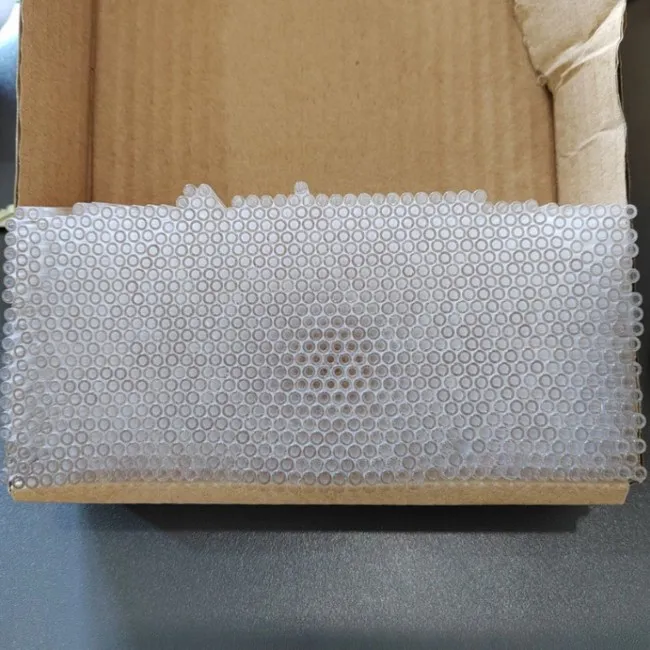
If you're in the market for a high - quality Quartz Chamber with outstanding UV resistance, we're here to help. Whether you need it for spectroscopy, photolithography, or any other application, our Quartz Chambers are designed to meet your requirements. Don't hesitate to reach out for more information or to start a procurement discussion. We look forward to working with you to find the perfect solution for your needs.
References
- Handbook of Optical Constants of Solids, edited by Edward D. Palik
- Introduction to Semiconductor Manufacturing Technologies, by Peter Van Zant