

When it comes to laboratory equipment, quartz glass flasks stand out for their exceptional properties, with transparency being one of the most remarkable features. As a leading supplier of quartz glass flasks, I am often asked about the transparency of these invaluable tools. In this blog post, I will delve into the nature of the transparency of quartz glass flasks, exploring its characteristics, advantages, and applications.
Understanding the Transparency of Quartz Glass Flasks
Quartz glass is renowned for its high transparency across a wide range of wavelengths, from ultraviolet (UV) to infrared (IR). This unique property is due to the chemical composition and structure of quartz glass. Quartz, also known as silicon dioxide (SiO₂), has a highly ordered atomic structure that allows light to pass through with minimal absorption or scattering.
The transparency of quartz glass flasks is not uniform across all wavelengths. In the visible light spectrum (approximately 400 - 700 nm), quartz glass exhibits excellent transparency, typically over 90%. This high level of transparency makes it ideal for applications where visual observation is crucial, such as in chemical reactions, biological experiments, and optical studies.
In the UV region, quartz glass outperforms most other types of glass. While ordinary glass absorbs a significant amount of UV light, quartz glass can transmit UV light with high efficiency. This property is particularly important in applications such as UV spectroscopy, photochemistry, and germicidal treatment. For example, in UV spectroscopy, quartz glass flasks are used to hold samples because they allow the UV light to pass through the sample without significant attenuation, enabling accurate measurement of the sample's absorption spectrum.
In the IR region, quartz glass also has good transparency. It can transmit IR light up to several micrometers in wavelength, making it suitable for applications in IR spectroscopy and thermal imaging. The ability to transmit IR light allows researchers to study the vibrational and rotational modes of molecules, which provides valuable information about the chemical structure and properties of the sample.
Advantages of High Transparency
The high transparency of quartz glass flasks offers several advantages in laboratory and industrial applications. Firstly, it allows for clear visual inspection of the contents inside the flask. This is essential in many experiments where the color, clarity, and phase changes of the sample need to be monitored. For example, in a chemical synthesis reaction, the researcher can easily observe the formation of a precipitate or the change in color of the solution, which provides important clues about the progress of the reaction.
Secondly, the high transparency in the UV and IR regions enables accurate spectroscopic measurements. Spectroscopy is a powerful analytical technique that is widely used in chemistry, biology, and materials science. By using quartz glass flasks, researchers can obtain more accurate and reliable spectroscopic data, which is crucial for understanding the chemical and physical properties of the sample.
Thirdly, the transparency of quartz glass flasks makes them suitable for applications in optical systems. For example, in laser technology, quartz glass is used to make Quartz Laser Cavity because its high transparency allows the laser beam to pass through with minimal loss. This helps to improve the efficiency and performance of the laser system.
Applications of Quartz Glass Flasks Based on Transparency
The transparency of quartz glass flasks makes them versatile tools in various fields. In the field of chemistry, they are used for chemical synthesis, titration, and distillation. The clear visibility of the contents inside the flask allows chemists to control the reaction conditions precisely and monitor the progress of the reaction.
In the field of biology, quartz glass flasks are used in cell culture, enzyme assays, and DNA analysis. The high transparency in the visible and UV regions allows for non - invasive monitoring of cell growth and metabolism. For example, in a cell culture experiment, the researcher can use a microscope to observe the cells inside the quartz glass flask without disturbing the culture environment.
In the field of optics, quartz glass flasks are used in optical experiments and devices. They can be used as cuvettes in spectroscopy, as windows in optical instruments, and as containers for optical fluids. The high transparency and low optical distortion of quartz glass ensure accurate and reliable optical measurements.
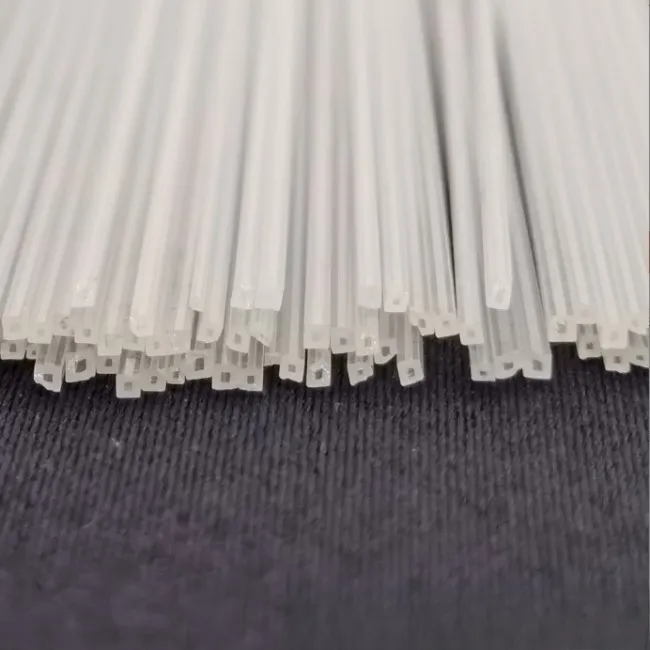
In addition, Quartz Chamber and Quartz Square Capillary are also important products related to quartz glass. Quartz chambers are often used in vacuum systems and gas - filled environments, where their high transparency allows for visual inspection of the internal environment. Quartz square capillaries are used in microfluidics and capillary electrophoresis, where their transparency enables the observation of fluid flow and separation processes.
Quality Control of Transparency
As a supplier of quartz glass flasks, we pay great attention to the quality control of transparency. We use advanced manufacturing processes and strict quality control measures to ensure that each quartz glass flask meets the highest standards of transparency.
During the manufacturing process, we carefully select the raw materials to ensure their purity and quality. Impurities in the raw materials can affect the transparency of the quartz glass, so we use high - purity quartz sand as the starting material. We also control the melting and forming processes to ensure that the quartz glass has a uniform structure and composition, which is essential for high transparency.
After manufacturing, each quartz glass flask undergoes a series of quality inspections. We use spectrophotometers to measure the transparency of the flask at different wavelengths. Only the flasks that meet the specified transparency requirements are approved for sale.
Conclusion
The transparency of quartz glass flasks is a remarkable property that makes them indispensable in many laboratory and industrial applications. Their high transparency in the visible, UV, and IR regions allows for clear visual inspection, accurate spectroscopic measurement, and reliable optical performance. As a supplier of quartz glass flasks, we are committed to providing high - quality products with excellent transparency to meet the diverse needs of our customers.
If you are interested in our quartz glass flasks or other related products, such as Quartz Chamber, Quartz Square Capillary, and Quartz Laser Cavity, please feel free to contact us for more information and to discuss your specific requirements. We look forward to working with you to meet your research and production needs.
References
- "Handbook of Glass Properties" by John C. Mauro and Susie M. Johnson
- "Spectroscopy: Principles, Theory, Techniques and Applications" by G. D. Christian, J. E. O'Reilly, and T. S. Svehla
- "Quartz Glass: Properties, Technology, Applications" by Dieter Krause