

Hey there! As a supplier of Quartz Ceramic Tubes, I often get asked about the available sizes. So, I thought I'd write this blog to clear up any confusion and give you all the deets.
Quartz ceramic tubes are super versatile. They're used in a bunch of industries, from electronics to aerospace. And the size you need really depends on what you're gonna use it for.

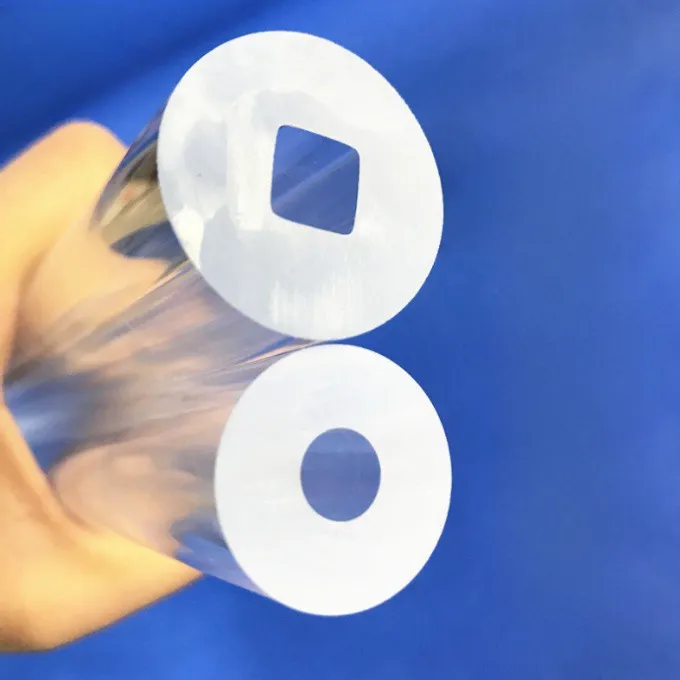
Let's start with the basics. When we talk about the size of a quartz ceramic tube, we're mainly looking at two things: the outer diameter (OD) and the length. The wall thickness also matters, but we'll get to that later.
Outer Diameter
The outer diameter of quartz ceramic tubes can vary quite a bit. We usually offer them in a range starting from as small as 5 mm up to 200 mm. For smaller applications like in some precision electronic devices or in certain types of laboratory equipment, the smaller diameters are the go - to. For example, a 5 - 10 mm OD tube might be used in sensors where space is limited and you need a compact heating element.
On the other hand, larger diameter tubes, say 100 - 200 mm, are often used in industrial heating processes. They can handle more power and are great for applications where you need to heat a large area or volume. If you're involved in large - scale manufacturing processes like glass melting or metal annealing, these larger tubes are the ones you'd want to look into.
You can check out our Quartz Infrared Heating Tube page for more details on how different diameters can affect the performance in heating applications.
Length
The length of the quartz ceramic tubes is another important factor. We offer lengths ranging from 50 mm to 2000 mm. Shorter tubes, around 50 - 100 mm, are commonly used in small - scale experiments or in some handheld devices. They're easy to handle and can be quickly integrated into smaller setups.
Longer tubes, on the other hand, are ideal for continuous processes. For instance, in a conveyor - based heating system in a factory, a 1000 - 2000 mm long tube can provide a consistent heat source along the entire length of the conveyor. This ensures uniform heating of the products passing through the system.
Wall Thickness
Wall thickness plays a crucial role in the performance of quartz ceramic tubes. We offer wall thicknesses from 1 mm to 10 mm. A thinner wall, like 1 - 2 mm, allows for faster heat transfer. This is great for applications where you need rapid heating and cooling cycles, such as in some semiconductor manufacturing processes.
Thicker walls, say 5 - 10 mm, provide more durability and can withstand higher pressures. They're often used in high - temperature and high - pressure environments, like in certain chemical reactors.
If you're interested in the general properties of quartz tubes, our Quartz Glass Tube page has more information on how wall thickness affects the overall performance.
Custom Sizes
Now, here's the cool part. We understand that sometimes the standard sizes just won't cut it. That's why we offer custom - made quartz ceramic tubes. Whether you need a non - standard outer diameter, length, or wall thickness, we've got you covered. Just send us your specifications, and our team of experts will work on creating the perfect tube for your application.
Applications and Size Selection
Let's take a look at some common applications and how the size of the quartz ceramic tube matters.
In the semiconductor industry, precision is key. Small - diameter and short - length tubes with thin walls are often used for local heating during the manufacturing process. They can provide the exact amount of heat needed in a specific area without affecting the surrounding components.
In the aerospace industry, where high - temperature and high - pressure resistance are crucial, larger tubes with thicker walls are preferred. These tubes can withstand the harsh conditions during flight and are used in various heating and cooling systems on aircraft.
For the laboratory environment, a wide range of sizes is available. You might use a small tube for a simple chemical reaction or a larger one for a more complex experiment involving heat treatment of materials. Our Quartz Crucible page also gives you an idea of how quartz products are used in different laboratory setups.
Quality Assurance
No matter what size of quartz ceramic tube you choose, we ensure the highest quality. We use advanced manufacturing techniques and strict quality control measures to make sure each tube meets the industry standards. Our tubes are tested for thermal stability, chemical resistance, and mechanical strength before they leave our facility.
Conclusion
So, there you have it! The available sizes of quartz ceramic tubes cover a wide range, from small and thin to large and thick. Whether you're in a high - tech industry or a research laboratory, there's a perfect tube size for your needs. And if the standard sizes don't fit, we're ready to create a custom solution for you.
If you're interested in purchasing quartz ceramic tubes or have any questions about the sizes, feel free to reach out. We're here to help you make the right choice for your application. Let's start a conversation and see how we can work together to meet your requirements.
References
- Industry standards for quartz ceramic tubes
- Technical specifications of our manufacturing equipment
- Case studies of different applications using quartz ceramic tubes