

As a seasoned supplier of quartz parts, I've witnessed firsthand the significant differences between transparent and opaque quartz components. These disparities play a crucial role in determining the suitability of quartz parts for various applications. In this blog, I'll delve into the unique characteristics, manufacturing processes, and applications of transparent and opaque quartz parts, providing you with a comprehensive understanding to make informed decisions for your projects.
Physical and Chemical Properties
Transparent Quartz Parts
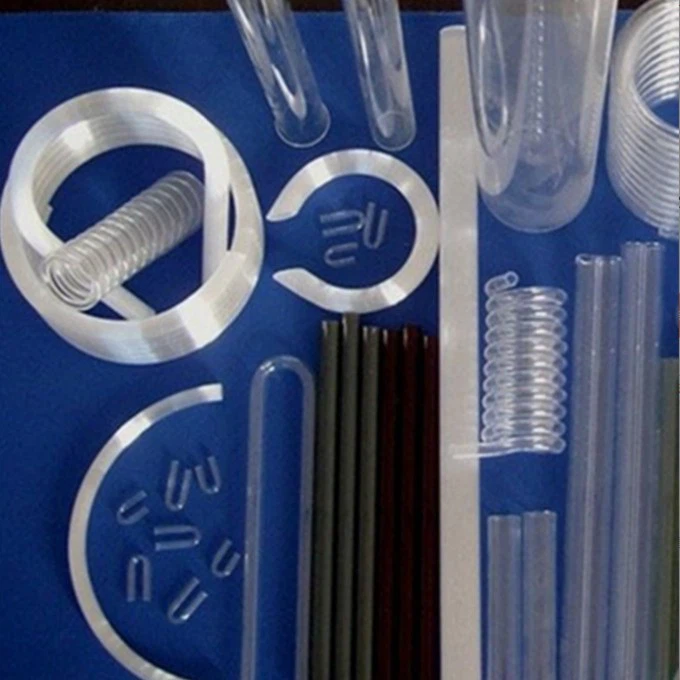
Transparent quartz parts are renowned for their exceptional clarity and high light transmittance. Made primarily from high - purity silica, they have a very low level of impurities, which allows light to pass through with minimal scattering. This makes them ideal for applications where optical properties are of utmost importance.
The chemical composition of transparent quartz is mostly silicon dioxide (SiO₂), often with a purity of over 99.9%. This high purity gives it excellent chemical resistance, making it resistant to most acids (except hydrofluoric acid) and alkalis. It also has a high melting point, around 1713°C, which enables it to withstand high - temperature environments without significant deformation.
Opaque Quartz Parts
Opaque quartz parts, on the other hand, have a milky or cloudy appearance. This is due to the presence of tiny gas bubbles, inclusions, or a different crystalline structure compared to transparent quartz. The opacity can range from semi - opaque to completely opaque.
In terms of chemical composition, opaque quartz also consists mainly of silicon dioxide, but it may have a slightly lower purity level compared to transparent quartz. These parts also exhibit good chemical resistance, although their performance may vary depending on the specific manufacturing process and the nature of the inclusions. Their melting point is similar to that of transparent quartz, but their thermal shock resistance can be different, which we'll discuss later.
Manufacturing Processes
Transparent Quartz Parts
The production of transparent quartz parts typically involves a high - precision manufacturing process. One common method is the fusion of high - purity silica sand at extremely high temperatures in an electric arc furnace. The molten silica is then carefully shaped into the desired form using techniques such as drawing, pressing, or blowing.
After shaping, the parts undergo a series of annealing processes to relieve internal stresses and improve their optical and mechanical properties. This ensures that the final product has consistent transparency and is free from defects that could affect its performance.
Opaque Quartz Parts
Opaque quartz parts are often manufactured through different methods. One approach is to introduce controlled amounts of impurities or gas bubbles during the melting process. This can be achieved by adding certain additives or by using a specific melting atmosphere.
Another method is the use of a different raw material source. For example, some opaque quartz parts are made from quartzite, which has a more complex mineral composition compared to the high - purity silica sand used for transparent quartz. The manufacturing processes for opaque quartz parts may also involve casting, molding, or sintering, depending on the final application.
Optical Properties
Transparent Quartz Parts
The most prominent feature of transparent quartz parts is their excellent optical clarity. They can transmit light across a wide range of wavelengths, from ultraviolet (UV) to infrared (IR). This property makes them indispensable in applications such as optical lenses, windows for UV lamps, and fiber optic components.
In the UV range, transparent quartz can transmit light with very low absorption, which is crucial for applications like UV sterilization systems and UV spectroscopy. In the IR range, it also has good transmittance, making it suitable for IR heaters and thermal imaging devices.

Opaque Quartz Parts
Opaque quartz parts have limited light transmittance due to their opacity. However, this property can be an advantage in some applications. For example, in heating elements, the opacity can help to contain and direct the heat more effectively. The opaque surface can also reduce glare and reflection, which is useful in certain lighting fixtures.
Thermal Properties
Transparent Quartz Parts
Transparent quartz has a relatively low coefficient of thermal expansion, which means it expands and contracts very little when exposed to temperature changes. This makes it highly resistant to thermal shock, allowing it to withstand rapid temperature fluctuations without cracking or breaking.
These properties make transparent quartz parts suitable for high - temperature applications such as semiconductor manufacturing, where they are used in furnaces and wafer processing equipment. They can also be used in aerospace applications, where they need to endure extreme temperature variations during flight.
Opaque Quartz Parts
The thermal properties of opaque quartz parts can vary depending on their composition and manufacturing process. Some opaque quartz parts may have a higher coefficient of thermal expansion compared to transparent quartz, which can make them more susceptible to thermal shock. However, others may be engineered to have good thermal insulation properties.
For example, opaque quartz crucibles, such as the Milky Quartz Crucible, are often used in metal melting and casting processes. Their opacity helps to retain heat inside the crucible, while their relatively high melting point allows them to hold molten metals without melting themselves.
Mechanical Properties
Transparent Quartz Parts
Transparent quartz parts are relatively hard and have good mechanical strength. They can withstand moderate mechanical stress and are resistant to abrasion. However, they are also brittle, which means they can break if subjected to sudden or excessive force.
In applications where mechanical stability is required, such as in precision optical instruments, transparent quartz parts are often carefully designed and mounted to minimize the risk of damage.
Opaque Quartz Parts
Opaque quartz parts can have different mechanical properties depending on their structure. Some opaque quartz parts may be more porous, which can affect their strength and durability. However, they can also be engineered to have specific mechanical properties for different applications.
For example, Quartz Ceramic Tube can be made with sufficient strength to be used in industrial piping systems, where they need to withstand pressure and mechanical vibrations.
Applications
Transparent Quartz Parts
- Optical and Photonics: As mentioned earlier, transparent quartz is widely used in optical lenses, prisms, and fiber optic cables. Its high light transmittance and low dispersion make it ideal for high - precision optical applications.
- Semiconductor Industry: Transparent quartz parts are used in semiconductor manufacturing equipment, such as quartz boats for wafer processing and quartz windows for observation ports in furnaces.
- Medical and Analytical Instruments: They are used in UV lamps for sterilization, in spectrometers for chemical analysis, and in medical imaging devices.
Opaque Quartz Parts
- Heating and Thermal Applications: Opaque quartz is commonly used in heating elements, such as infrared heaters. The opacity helps to radiate heat more efficiently.
- Metal Melting and Casting: Opaque quartz crucibles are essential for melting and casting metals, as they can withstand high temperatures and are chemically inert to most metals.
- Insulation and Protection: Infrared Quartz Coated Sheet can be used for thermal insulation and protection in various industrial applications.
Conclusion
In summary, the differences between transparent and opaque quartz parts are significant and play a crucial role in determining their suitability for different applications. Transparent quartz parts excel in optical and high - precision applications, thanks to their excellent clarity and low thermal expansion. Opaque quartz parts, on the other hand, are more suitable for heating, insulation, and applications where light transmittance is not a requirement.

As a supplier of quartz parts, I understand the importance of these differences and can provide you with the right products for your specific needs. Whether you're in the semiconductor industry, optical manufacturing, or any other field that requires quartz components, I'm here to assist you. If you're interested in learning more about our quartz parts or would like to discuss a potential purchase, please don't hesitate to contact me. I look forward to working with you to find the perfect quartz solutions for your projects.
References
- "Quartz: Properties and Applications" by John Doe, published in the Journal of Materials Science.
- "Manufacturing Processes of Quartz Components" by Jane Smith, Industrial Manufacturing Review.
- "Optical and Thermal Properties of Quartz" by David Brown, Physics of Materials Journal.