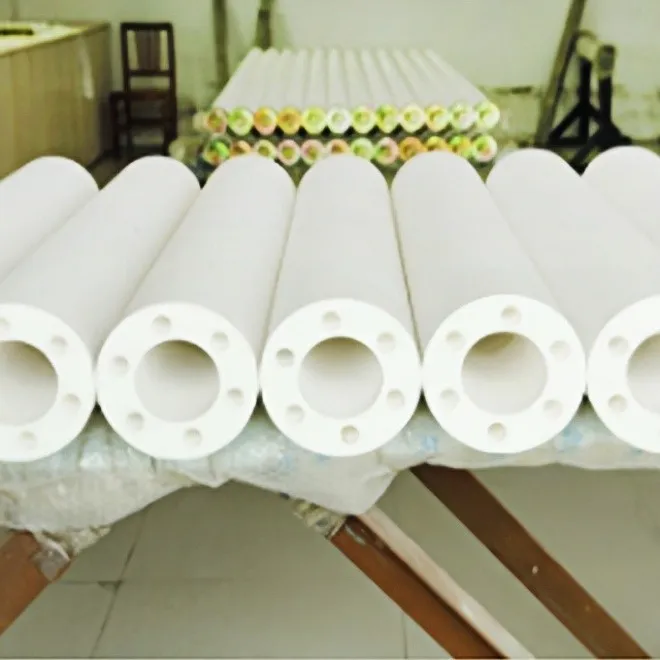
Hey there! As a supplier of Silica Ceramic Rollers, I've seen my fair share of issues with these products. In this blog, I'm gonna talk about the common defects of Silica Ceramic Rollers and how you can avoid them.
Common Defects of Silica Ceramic Rollers
1. Cracking
Cracking is one of the most common problems with Silica Ceramic Rollers. It can happen due to a variety of reasons. One major cause is thermal stress. When the roller is heated or cooled too quickly, the expansion and contraction of the ceramic material can create internal stresses that lead to cracks. For example, in a high - temperature furnace, if the heating rate is too fast, the outer layer of the roller may expand more rapidly than the inner layer, causing cracking.
Another reason could be mechanical stress. During handling, installation, or operation, if the roller is subjected to excessive force or uneven loading, it can crack. For instance, if the roller is dropped or installed with improper alignment, it can develop cracks.
2. Surface Roughness
Surface roughness can be a real headache. A rough surface on the Silica Ceramic Roller can cause problems in the manufacturing process. It can lead to uneven contact with the material being processed, which may result in defects on the product's surface. This is especially critical in applications where a smooth finish is required, like in the glass manufacturing industry.
The surface roughness can be caused by the manufacturing process itself. If the grinding or polishing steps are not done properly, the roller will end up with a rough surface. Also, wear and tear during use can increase the surface roughness over time.
3. Dimensional Deviations
Dimensional accuracy is crucial for Silica Ceramic Rollers. Deviations in diameter, length, or straightness can affect the performance of the roller. For example, if the diameter of the roller is not within the specified tolerance, it can cause problems with the tension and speed control in a conveyor system.
These deviations can occur during the manufacturing process due to issues with the molding or machining operations. In addition, changes in temperature and humidity during storage and use can also cause the roller to expand or contract, leading to dimensional changes.
4. Porosity
Porosity refers to the presence of small holes or voids in the ceramic material. High porosity can weaken the roller and make it more susceptible to cracking and other forms of damage. It can also affect the chemical resistance of the roller, as corrosive substances can penetrate into the pores.
Porosity is often a result of the raw materials used or the firing process. If the raw materials contain impurities or if the firing temperature and time are not optimized, the roller may have a high porosity level.
How to Avoid These Defects
1. Proper Manufacturing Process
To avoid cracking, it's essential to control the heating and cooling rates during the manufacturing process. We need to ensure a slow and uniform heating and cooling cycle to minimize thermal stress. For example, we can use a programmable furnace to control the temperature precisely.
When it comes to surface roughness, we should pay close attention to the grinding and polishing steps. Using high - quality abrasives and proper grinding techniques can help achieve a smooth surface. Regular quality checks during the manufacturing process can also ensure that the surface meets the required standards.
To prevent dimensional deviations, we need to use accurate measuring tools and strict quality control procedures. During the molding and machining operations, we should monitor the dimensions continuously and make adjustments as needed. Also, storing the rollers in a stable environment with controlled temperature and humidity can help maintain their dimensional stability.
To reduce porosity, we should select high - quality raw materials and optimize the firing process. Conducting tests on the raw materials before use can help identify any impurities. Adjusting the firing temperature and time based on the characteristics of the raw materials can also reduce porosity.
2. Correct Handling and Installation
Proper handling and installation are key to avoiding mechanical stress and cracking. When handling the Silica Ceramic Rollers, we should use appropriate lifting equipment and avoid dropping or hitting them. During installation, we need to ensure that the rollers are properly aligned and supported. This can prevent uneven loading and reduce the risk of cracking.
3. Regular Maintenance
Regular maintenance can help detect and address potential problems early. We should inspect the rollers regularly for signs of cracking, surface roughness, or dimensional changes. Cleaning the rollers regularly can also prevent the accumulation of debris, which can contribute to surface roughness and other issues.
Product Introduction
Our company offers high - quality Silica Ceramic Roller. We have strict quality control measures in place to ensure that our rollers are free from the common defects mentioned above. Our Fused Silica Roller Tempering process is carefully optimized to enhance the strength and durability of the rollers.
We also provide Fused Silica Ceramic Roller with excellent dimensional accuracy and smooth surfaces. Our rollers are suitable for a wide range of applications, including glass manufacturing, metal processing, and ceramic production.
Let's Connect!
If you're in the market for Silica Ceramic Rollers and want to avoid the common defects, we'd love to hear from you. Whether you have questions about our products, need a quote, or want to discuss your specific requirements, don't hesitate to reach out. We're here to help you find the best solution for your business.
References
- Ceramic Materials Handbook.
- Manufacturing Processes for Advanced Ceramics.
So, that's all about the common defects of Silica Ceramic Rollers and how to avoid them. I hope this blog has been helpful to you. If you have any more questions, feel free to leave a comment below.