

Hey there! As a supplier of quartz glass beakers, I've seen firsthand how versatile these little guys can be. In this blog post, I'm gonna share with you some of the common applications of quartz glass beakers.
1. Laboratory Experiments
One of the most well - known uses of quartz glass beakers is in laboratories. Scientists and researchers rely on them for a wide range of experiments.
Chemical Reactions
Quartz glass is highly resistant to chemical corrosion. It can withstand exposure to strong acids, bases, and many organic solvents. This makes it ideal for mixing and reacting different chemicals. For example, when conducting an acid - base titration, a quartz glass beaker can hold the analyte solution without getting damaged by the acidic or basic nature of the substances involved. The clear transparency of quartz glass also allows researchers to easily observe the color changes and other visual cues during the reaction.
Heating and Cooling
Quartz has excellent thermal properties. It can tolerate rapid temperature changes without cracking. This is crucial when performing experiments that involve heating or cooling substances. You can place a quartz glass beaker directly on a Bunsen burner or in a heating mantle to heat up a solution. Similarly, it can be quickly transferred to an ice bath for cooling. This ability to handle extreme temperature variations makes quartz glass beakers a staple in chemistry and physics labs.
2. Pharmaceutical Industry
The pharmaceutical industry also makes great use of quartz glass beakers.
Drug Development
During the process of drug development, scientists need to accurately measure and mix various ingredients. Quartz glass beakers provide a clean and inert environment for these operations. They won't react with the pharmaceutical compounds, ensuring the purity of the samples. For instance, when formulating a new oral medication, the active ingredients and excipients can be mixed in a quartz glass beaker to create a homogeneous solution or suspension.
Quality Control
In quality control laboratories, quartz glass beakers are used to prepare samples for analysis. The high - precision measurement markings on the beakers allow for accurate volume determination. This is essential for ensuring that the pharmaceutical products meet the required standards. Whether it's testing the concentration of a drug or checking for impurities, quartz glass beakers play a vital role in the quality control process.
3. Food and Beverage Industry
You might not think of quartz glass beakers when it comes to food and drinks, but they actually have some important applications here too.
Flavor and Ingredient Testing
Food scientists use quartz glass beakers to test new flavors and ingredients. They can mix different food components in the beakers to create prototypes of new products. For example, if a company is developing a new energy drink, they can use a quartz glass beaker to combine various vitamins, minerals, and flavorings. The transparency of the beaker allows them to visually assess the color and clarity of the mixture.
Quality Assurance
In the quality assurance department of food and beverage companies, quartz glass beakers are used for sample preparation. They can be used to measure and dilute samples for chemical analysis, such as testing for sugar content, acidity, or the presence of contaminants. This helps ensure that the products are safe and meet the desired quality standards.
4. Electronics Industry
The electronics industry has a growing demand for quartz glass beakers.
Semiconductor Manufacturing
In semiconductor manufacturing, extremely clean and precise environments are required. Quartz glass beakers are used to hold and process chemicals that are used in the fabrication of semiconductor chips. The high purity of quartz glass ensures that there are no contaminants that could affect the performance of the semiconductors. For example, during the etching process, a quartz glass beaker can hold the etching solution, which is used to remove unwanted layers from the semiconductor wafer.
Research and Development
Electronics research and development teams also use quartz glass beakers for various experiments. They can be used to study the properties of new materials or to develop new manufacturing processes. The thermal and chemical stability of quartz glass makes it a reliable choice for these types of experiments.
5. Other Related Quartz Glass Products
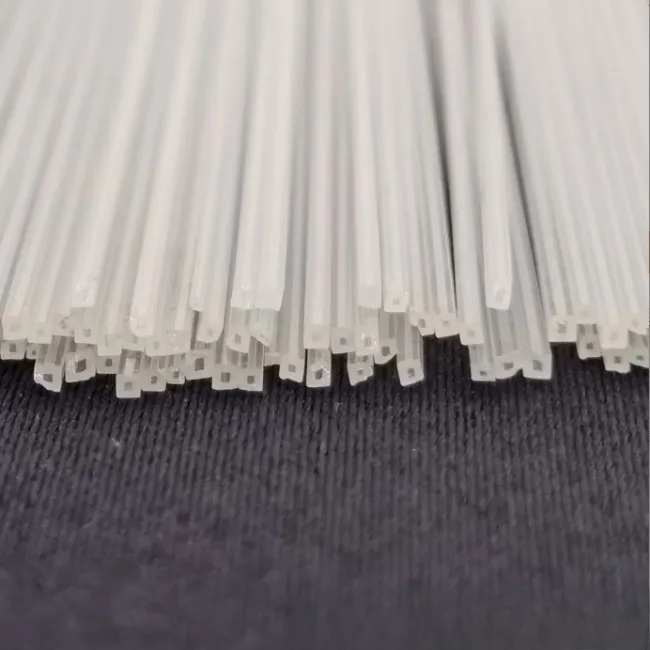
While we're talking about quartz glass beakers, it's worth mentioning some other related products that you might also find useful. Check out our Quartz Glass Flask, which is great for storing and mixing larger volumes of liquids. The Quartz Chamber is perfect for creating controlled environments for experiments. And if you need precise liquid handling, our Quartz Square Capillary is a great option.

Conclusion
As you can see, quartz glass beakers have a wide range of applications across different industries. Their unique properties, such as chemical resistance, thermal stability, and transparency, make them an indispensable tool in many fields. Whether you're a scientist in a research lab, a quality control specialist in a pharmaceutical company, or an engineer in the electronics industry, quartz glass beakers can meet your needs.
If you're interested in purchasing quartz glass beakers or any of our other quartz glass products, don't hesitate to get in touch with us. We're always ready to assist you with your procurement needs and answer any questions you might have.
References
- "Laboratory Glassware Handbook" - A comprehensive guide on the use and properties of laboratory glassware, including quartz glass beakers.
- "The Pharmaceutical Manufacturing Handbook" - Details the role of various equipment, such as quartz glass beakers, in the pharmaceutical industry.
- "Semiconductor Manufacturing Technology" - Discusses the requirements and applications of high - purity materials like quartz glass in semiconductor manufacturing.