

As a supplier of Silica Ceramic Rollers, I've witnessed firsthand how the texture of these rollers can significantly impact their function. In this blog, I'll delve into the various aspects of texture and explain how it affects the performance of Silica Ceramic Rollers in different industrial applications.
Understanding the Basics of Silica Ceramic Rollers
Silica Ceramic Rollers are widely used in industries such as glass manufacturing, heat treatment, and metal processing. They are known for their high-temperature resistance, excellent mechanical properties, and chemical stability. These rollers are typically made from fused silica, a material with unique properties that make it suitable for demanding applications.
Before we discuss the impact of texture, let's briefly understand the structure of Silica Ceramic Rollers. They are composed of a dense ceramic matrix with a specific grain structure. The texture of the roller refers to the surface characteristics, including roughness, porosity, and the arrangement of grains. These factors can be controlled during the manufacturing process to achieve the desired performance.
The Role of Surface Roughness
Surface roughness is one of the most critical aspects of the texture of a Silica Ceramic Roller. It can have a profound impact on the roller's ability to grip and transport materials. In glass manufacturing, for example, a roller with the right surface roughness is essential for ensuring proper glass sheet movement on the production line.
A rougher surface provides more friction, which can be beneficial in applications where a strong grip is required. This is particularly important when handling heavy or large glass sheets. However, too much roughness can also cause damage to the glass surface, leading to scratches or other defects. On the other hand, a smoother surface may reduce friction, which can be advantageous in applications where gentle handling is necessary. For instance, in the production of thin or delicate glass products, a smoother roller surface can prevent damage and ensure high-quality output.
The surface roughness of a Silica Ceramic Roller can be adjusted through various manufacturing techniques. For example, grinding and polishing processes can be used to achieve a specific level of smoothness. Additionally, the choice of raw materials and the firing conditions can also influence the final surface texture.
Porosity and Its Effects
Porosity is another important factor in the texture of Silica Ceramic Rollers. It refers to the presence of small pores or voids within the ceramic material. Porosity can affect the roller's thermal conductivity, mechanical strength, and chemical resistance.
In terms of thermal conductivity, a roller with a higher porosity may have lower heat transfer efficiency. This can be beneficial in applications where temperature control is crucial, such as in glass tempering processes. Fused Silica Roller Tempering requires precise temperature management, and a roller with the right porosity can help maintain the desired temperature profile.
However, excessive porosity can also weaken the roller's mechanical strength. Pores can act as stress concentrators, making the roller more prone to cracking or breaking under load. Therefore, it's essential to balance the porosity to ensure both thermal performance and mechanical integrity.
The chemical resistance of a Silica Ceramic Roller can also be influenced by porosity. Pores can provide pathways for chemicals to penetrate the material, potentially leading to corrosion or other forms of degradation. In applications where the roller is exposed to harsh chemicals or environments, a low-porosity roller may be preferred to ensure long-term durability.
Grain Structure and Arrangement
The grain structure and arrangement within a Silica Ceramic Roller can have a significant impact on its mechanical properties and performance. The size, shape, and orientation of the grains can affect the roller's strength, hardness, and wear resistance.
A fine-grained structure generally provides better mechanical properties, such as higher strength and hardness. Fine grains can also improve the roller's wear resistance, making it more suitable for applications where there is significant friction or abrasion. For example, in metal processing, a roller with a fine-grained structure can withstand the high pressures and forces involved in rolling operations.
The arrangement of the grains can also play a role in the roller's performance. A well-aligned grain structure can enhance the roller's directional properties, such as its ability to withstand stress in a particular direction. This can be important in applications where the roller is subjected to unidirectional forces, such as in conveyor systems.
Impact on Different Industrial Applications
The texture of a Silica Ceramic Roller can have different effects depending on the specific industrial application. Let's take a closer look at some of the common applications and how texture influences performance.
Glass Manufacturing
In glass manufacturing, the texture of the rollers is crucial for ensuring the quality and efficiency of the production process. As mentioned earlier, the surface roughness of the roller affects the glass sheet's movement and handling. A roller with the right texture can prevent slippage, ensure uniform thickness, and reduce the risk of defects.
The porosity of the roller also plays a role in glass manufacturing. In the float glass process, for example, a roller with low porosity can help maintain a stable temperature and prevent heat loss. This is important for achieving the desired glass properties, such as transparency and flatness.
Heat Treatment
In heat treatment applications, the texture of the Silica Ceramic Roller can affect the heat transfer and temperature distribution. A roller with a suitable porosity and surface roughness can ensure efficient heat transfer, leading to more uniform heating and cooling of the materials being processed.
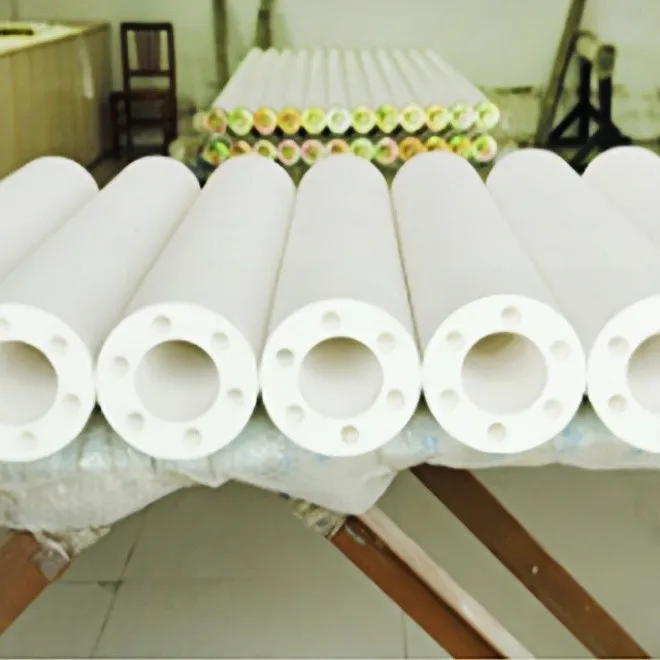

The mechanical properties of the roller, which are influenced by the grain structure and texture, are also important in heat treatment. The roller needs to withstand high temperatures and mechanical stresses without deforming or breaking. A roller with a fine-grained structure and appropriate texture can provide the necessary strength and durability.
Metal Processing
In metal processing, the texture of the Silica Ceramic Roller can impact the quality of the rolled metal products. A roller with a smooth surface can reduce friction and prevent surface defects on the metal. The grain structure and hardness of the roller are also important for ensuring precise shaping and sizing of the metal.
Choosing the Right Texture for Your Application
Selecting the right texture for a Silica Ceramic Roller depends on several factors, including the specific application, the materials being processed, and the operating conditions. As a supplier, we work closely with our customers to understand their requirements and recommend the most suitable roller texture.
We offer a range of Fused Silica Rollers and Fused Silica Ceramic Rollers with different textures to meet the diverse needs of our customers. Our experienced team can provide technical support and guidance to help you make the best choice for your application.
Conclusion
The texture of a Silica Ceramic Roller has a significant impact on its function and performance in various industrial applications. Surface roughness, porosity, grain structure, and arrangement all play crucial roles in determining the roller's ability to grip, transport, and process materials. By understanding these factors and choosing the right texture, you can optimize the performance of your production processes and achieve high-quality output.
If you're interested in learning more about our Silica Ceramic Rollers or need assistance in selecting the right texture for your application, please don't hesitate to contact us. We're here to help you find the best solution for your specific needs.
References
- "Ceramics: Structure, Properties, and Processing" by Richard A. Haber
- "Glass Manufacturing Technology" by Donald E. Yarbrough
- "Metal Forming Processes and Die Design" by P. K. Mallick