

Can quartz ceramic roller be used in high - speed production lines?

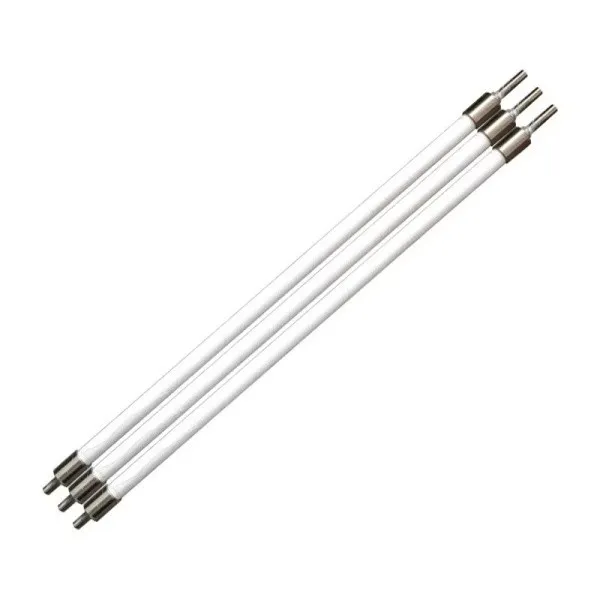
As a supplier of quartz ceramic rollers, I've been frequently asked whether our products can be effectively utilized in high - speed production lines. This question is not only relevant to the performance of our rollers but also to the efficiency and productivity of various industries. In this blog, I'll delve into the characteristics of quartz ceramic rollers and analyze their suitability for high - speed production environments.
Characteristics of Quartz Ceramic Rollers
Quartz ceramic rollers possess several unique properties that make them stand out in the industrial roller market. First and foremost, they have excellent thermal stability. Quartz ceramic has a very low coefficient of thermal expansion, which means it can withstand rapid temperature changes without significant dimensional changes. This is crucial in high - speed production lines where processes often involve heating and cooling cycles. For example, in glass manufacturing, the rollers need to transport the hot glass sheets at high speeds while maintaining their shape and integrity. The thermal stability of quartz ceramic rollers ensures that they won't warp or deform under high - temperature conditions, thus preventing any damage to the products being processed.
Another important characteristic is their high hardness and wear resistance. Quartz ceramic is a hard material that can resist abrasion caused by the continuous movement of products on the rollers. In high - speed production lines, the rollers are subject to a large amount of friction and mechanical stress. The wear - resistant nature of quartz ceramic rollers extends their service life, reducing the frequency of roller replacement and minimizing production downtime. This is a significant advantage for industries that rely on continuous and high - speed production, such as the electronics and automotive industries, where any interruption in the production line can lead to substantial losses.
Quartz ceramic rollers also offer smooth surfaces. A smooth surface is essential for high - speed production as it reduces friction between the roller and the product, allowing for a more efficient and stable transportation process. This smoothness also helps to prevent scratches and other surface defects on the products being processed. For instance, in the production of thin - film solar cells, a smooth roller surface is necessary to ensure the quality of the delicate solar cell films.
Advantages in High - Speed Production Lines
In high - speed production lines, speed and precision are of utmost importance. Quartz ceramic rollers can meet these requirements effectively. Their high - temperature resistance allows them to operate in high - speed processes that involve heat, such as annealing and tempering. For example, in the glass tempering process, Fused Silica Roller Tempering can withstand the high temperatures required for rapid cooling, ensuring the proper tempering of the glass sheets. The low thermal expansion coefficient also contributes to the precision of the process, as it maintains the accurate positioning of the products on the rollers.
The wear resistance of quartz ceramic rollers is a key advantage in high - speed production. Since they can endure long - term high - speed operation without significant wear, they can maintain a consistent performance over time. This consistency is crucial for ensuring the quality and uniformity of the products. In a high - speed printing production line, for example, the rollers need to transfer ink or other materials accurately and consistently. The wear - resistant quartz ceramic rollers can provide this reliability, resulting in high - quality printed products.
The smooth surface of quartz ceramic rollers also plays a vital role in high - speed production. It enables the products to move smoothly along the production line, reducing the risk of jams and other mechanical failures. This smooth movement is especially important in high - speed packaging lines, where products need to be transported quickly and accurately to the packaging stations.
Challenges and Solutions
Although quartz ceramic rollers have many advantages in high - speed production lines, there are also some challenges that need to be addressed. One of the challenges is the relatively high cost of quartz ceramic rollers compared to other types of rollers. However, when considering the long - term benefits, such as the extended service life and reduced production downtime, the overall cost - effectiveness of quartz ceramic rollers becomes evident. In addition, as the technology for manufacturing quartz ceramic rollers continues to develop, the cost is gradually decreasing, making them more accessible to a wider range of industries.
Another challenge is the brittleness of quartz ceramic. While it is a hard material, it can be prone to cracking under extreme mechanical stress. To overcome this issue, our company has developed advanced manufacturing techniques to improve the toughness of the rollers. We use special additives and processing methods to enhance the internal structure of the quartz ceramic, making it more resistant to cracking. Additionally, we provide detailed installation and maintenance instructions to ensure that the rollers are used and handled properly, minimizing the risk of damage.
Applications in Different Industries
Quartz ceramic rollers have a wide range of applications in high - speed production lines across various industries. In the glass industry, they are used in float glass production, glass tempering, and glass coating processes. The high - temperature resistance and smooth surface of the rollers are essential for ensuring the quality of the glass products. Silica Quartz Roller is widely used in these applications, providing reliable support for the high - speed movement of glass sheets.
In the electronics industry, quartz ceramic rollers are used in the production of printed circuit boards (PCBs) and semiconductor wafers. The precision and smoothness of the rollers are crucial for the accurate processing of these delicate electronic components. They can transport the PCBs and wafers at high speeds without causing any damage, ensuring the high - quality production of electronic products.
In the textile industry, quartz ceramic rollers are used in high - speed dyeing and finishing processes. The wear resistance and chemical stability of the rollers make them suitable for use in harsh chemical environments. They can transport the textiles smoothly through the dyeing and finishing machines, improving the efficiency and quality of the textile production.
Conclusion
In conclusion, quartz ceramic rollers can indeed be used in high - speed production lines. Their unique characteristics, such as high thermal stability, wear resistance, and smooth surface, make them well - suited for the demanding requirements of high - speed processes. Although there are some challenges, such as the high cost and brittleness, these can be overcome through technological advancements and proper handling.
If you are looking for high - performance rollers for your high - speed production line, Silica Ceramic Roller is an excellent choice. Our company is committed to providing high - quality quartz ceramic rollers and comprehensive technical support. We invite you to contact us for further discussions on how our rollers can meet your specific production needs. We look forward to establishing long - term partnerships with you and contributing to the success of your high - speed production operations.
References
- "Ceramic Materials Science and Engineering" by J. Reed
- "Industrial Roller Technology" by R. Johnson
- Technical reports from our company's R & D department