

Can a quartz glass flask be used for storing radioactive substances? That's a question I've been asked quite a bit lately, and as a supplier of Quartz Glass Flask, I'm more than happy to dive into this topic.
First off, let's talk about what makes quartz glass so special. Quartz glass is made from almost pure silica. It has some really cool properties that make it stand out from other types of glass. For starters, it has a super high melting point. This means it can handle a lot of heat without getting all mushy. It also has excellent chemical resistance, which means it won't react easily with a whole bunch of different chemicals. And it's pretty transparent too, both in the visible light range and parts of the ultraviolet and infrared ranges.
Now, when it comes to storing radioactive substances, there are a few key things we need to think about. Radioactive substances give off different types of radiation, like alpha particles, beta particles, and gamma rays. Each type of radiation has different properties and requires different kinds of shielding.
Alpha particles are relatively large and heavy. They don't have a lot of energy and can be stopped by something as simple as a sheet of paper or even the outer layer of your skin. So, in terms of alpha radiation, a quartz glass flask would do just fine. The glass is thick enough to block these particles from getting out.
Beta particles are a bit more energetic and smaller than alpha particles. They can penetrate a little deeper, but still, a quartz glass flask can provide a good level of protection. The silica in the quartz glass can interact with the beta particles and slow them down, eventually stopping them.
Gamma rays are the real troublemakers. They're high - energy electromagnetic waves that can penetrate a lot of different materials. A quartz glass flask on its own isn't going to be enough to fully shield against gamma rays. You'd need something much denser, like lead or concrete, to really block them effectively.

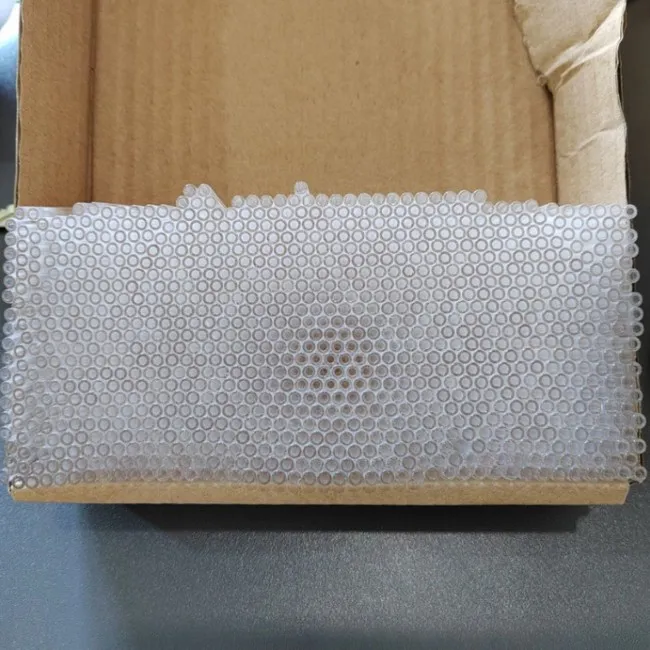
But here's the thing. In some cases, a quartz glass flask can still be useful for storing radioactive substances. For example, if you're dealing with a low - level radioactive source that mainly emits alpha or beta particles, the quartz glass flask can be a great option. It can keep the substance contained and prevent it from leaking out. And because of its chemical resistance, it won't react with the radioactive material, which is really important for long - term storage.
Another advantage of using a quartz glass flask is its transparency. If you need to monitor the radioactive substance inside, being able to see it without having to open the container is a huge plus. You can check for any signs of changes, like discoloration or the formation of bubbles, which could indicate a problem.
Now, let's compare quartz glass flasks with some other quartz products we offer, like Quartz Chamber and Quartz Square Capillary. Quartz chambers are often used in more complex experimental setups. They can be designed to have specific shapes and sizes to accommodate different types of equipment. If you're doing experiments with radioactive substances and need a controlled environment, a quartz chamber might be a better choice.
Quartz square capillaries, on the other hand, are great for very small - scale applications. They're often used in analytical chemistry or in experiments where you need to handle tiny amounts of liquid. If you're dealing with a radioactive liquid sample in a very small quantity, a quartz square capillary could be the way to go.
However, when it comes to general storage of radioactive substances, the quartz glass flask has its own unique advantages. It's relatively easy to handle, comes in different sizes, and can be sealed properly to prevent any leaks.
Of course, before using a quartz glass flask for storing radioactive substances, you need to make sure you follow all the safety regulations. You should have a proper risk assessment done to determine if it's the right choice for your specific situation. And always work with professionals who are experienced in handling radioactive materials.
If you're in the market for a high - quality quartz glass flask or any other quartz products, I'd love to hear from you. Whether you're a researcher, a scientist, or someone working in an industry that deals with radioactive substances, we have the products to meet your needs. Reach out to us to start a conversation about your requirements. We can help you choose the right product and answer any questions you might have.
In conclusion, while a quartz glass flask can't fully shield against all types of radiation, it can be a valuable option for storing certain radioactive substances, especially those that emit alpha or beta particles. Its unique properties make it a great choice for many applications, and we're here to provide you with the best - quality products.
References
- "Handbook of Radioactivity Analysis" by Michael F. L'Annunziata
- "Quartz Glass: Properties and Applications" by various industry experts