

Can a quartz crucible be used for melting nitrides? This is a question that often arises in the field of materials science and high - temperature processing. As a supplier of quartz crucibles, I have had numerous discussions with researchers, engineers, and manufacturers about the suitability of our products for various applications, including the melting of nitrides. In this blog post, I will explore the properties of quartz crucibles and nitrides, analyze the potential challenges and considerations, and provide some insights based on our experience in the industry.
Properties of Quartz Crucibles
Quartz crucibles are made from high - purity quartz glass, which is known for its excellent thermal stability, chemical resistance, and low thermal expansion coefficient. These properties make quartz crucibles suitable for a wide range of high - temperature applications, such as semiconductor manufacturing, crystal growth, and metal melting.
The high melting point of quartz (around 1713°C) allows it to withstand extreme temperatures without deforming or melting. Its low thermal expansion coefficient ensures that it can endure rapid temperature changes without cracking, which is crucial in processes that involve heating and cooling cycles. Additionally, quartz glass has good chemical resistance to many acids, alkalis, and other corrosive substances, protecting the crucible from damage during use.
Properties of Nitrides
Nitrides are a class of compounds that contain nitrogen and a metal or non - metal element. They have a wide range of properties, from high hardness and wear resistance to excellent electrical and thermal conductivity. Some common nitrides include silicon nitride (Si₃N₄), aluminum nitride (AlN), and boron nitride (BN).
Silicon nitride is a hard, strong, and chemically stable ceramic material with a high melting point (about 1900°C). It is often used in high - temperature applications, such as cutting tools and engine components. Aluminum nitride has high thermal conductivity and good electrical insulation properties, making it suitable for use in electronic devices. Boron nitride exists in different crystal structures, including hexagonal boron nitride (h - BN) and cubic boron nitride (c - BN). h - BN is a good lubricant and electrical insulator, while c - BN is extremely hard and is used in cutting and grinding applications.
Challenges of Using Quartz Crucibles for Melting Nitrides
While quartz crucibles have many advantages, there are several challenges when considering their use for melting nitrides.
Chemical Reactivity
One of the main concerns is the potential chemical reaction between the quartz crucible and the nitride material. At high temperatures, nitrogen in the nitride may react with the silicon dioxide (SiO₂) in the quartz glass. For example, silicon nitride can react with quartz at elevated temperatures to form silicon oxynitride (Si₂N₂O) and other compounds. This reaction can not only damage the crucible but also contaminate the nitride material, affecting its properties and performance.
The chemical reaction can be represented by the following equation:
3SiO₂ + Si₃N₄ → 6Si₂N₂O
This reaction occurs at relatively high temperatures, typically above 1400°C. As the reaction progresses, the quartz crucible may start to erode, and the composition of the nitride material may change, leading to unwanted impurities in the final product.
Thermal Expansion Mismatch
Another challenge is the thermal expansion mismatch between the quartz crucible and the nitride material. Different nitrides have different thermal expansion coefficients, and if they are significantly different from that of quartz, it can cause stress and cracking during heating and cooling cycles. For instance, aluminum nitride has a thermal expansion coefficient of about 4.2×10⁻⁶/°C, while quartz has a much lower thermal expansion coefficient of about 0.55×10⁻⁶/°C. This difference can lead to mechanical stress within the crucible and the nitride, potentially causing the crucible to crack or the nitride to develop internal defects.
Considerations and Solutions
Despite these challenges, there are situations where a quartz crucible can be used for melting nitrides with proper considerations.
Temperature Control
Controlling the temperature is crucial. By keeping the melting temperature below the point where significant chemical reactions occur, the risk of crucible damage and material contamination can be reduced. For some nitrides, such as boron nitride, the melting process can be carried out at relatively lower temperatures, minimizing the interaction between the nitride and the quartz crucible.
Coating
Applying a protective coating to the inner surface of the quartz crucible can also be an effective solution. Coatings such as boron nitride or other inert materials can act as a barrier between the nitride material and the quartz, preventing direct contact and chemical reactions. However, the coating must be carefully selected and applied to ensure its stability at high temperatures and its compatibility with the nitride material.
Short - term Use
In some cases, if the melting process is a short - term operation, the chemical reaction between the quartz crucible and the nitride may not have enough time to cause significant damage. For example, in small - scale laboratory experiments or one - off production runs, a quartz crucible can be used with careful monitoring.
Other Quartz Products for Related Applications
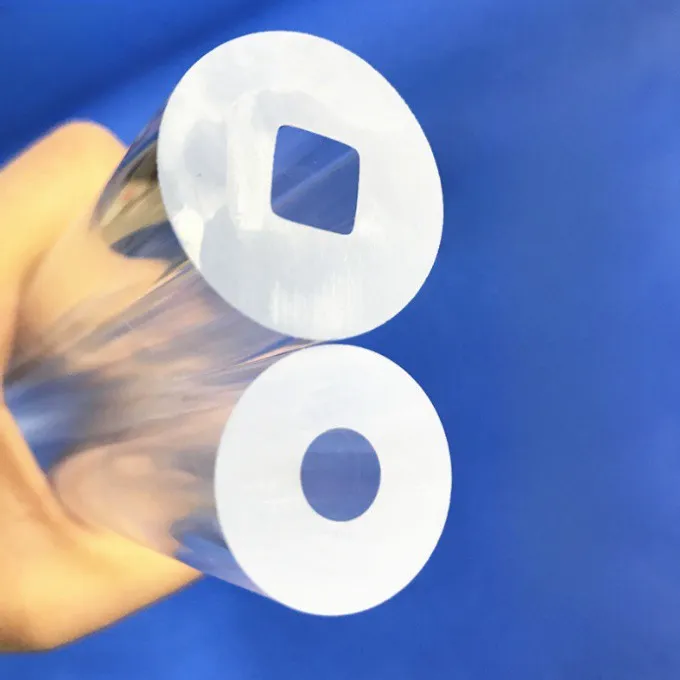
In addition to quartz crucibles, we also offer a variety of other quartz products that may be useful in nitride - related applications. For example, our Quartz Glass Tube can be used for gas delivery or as a reaction chamber in some nitride synthesis processes. The high - purity quartz glass ensures that there is minimal contamination during the process.
Our Quartz Light Guide Rod can be used in optical measurement systems during nitride research. The excellent optical properties of quartz allow for accurate light transmission and measurement.
The Quartz Boat is another product that can be used for handling and transporting nitride materials. Its high - temperature resistance and chemical stability make it suitable for use in various high - temperature processing steps.
Conclusion
In conclusion, while using a quartz crucible for melting nitrides presents some challenges due to chemical reactivity and thermal expansion mismatch, it is not entirely impossible. With proper temperature control, the use of coatings, and careful consideration of the application requirements, a quartz crucible can be used in certain nitride - melting processes.

As a quartz crucible supplier, we understand the importance of providing high - quality products that meet the diverse needs of our customers. We are committed to working with researchers, engineers, and manufacturers to find the best solutions for their specific applications. If you are interested in learning more about our quartz crucibles or other quartz products for nitride - related applications, please feel free to contact us for further discussion and potential procurement.
References
- "Introduction to Ceramics" by W. D. Kingery, H. K. Bowen, and D. R. Uhlmann.
- "High - Temperature Materials and Their Applications" edited by R. A. Rapp.
- "Handbook of Nitride Semiconductors and Devices" by T. Detchprohm, H. Amano, and I. Akasaki.