

Hey there! As a supplier of Quartz Chamber, I often get asked if these nifty chambers can be used in a plasma environment. Well, let's dig into this topic and find out!
First off, let's understand what a Quartz Chamber is. It's a container made of high - quality quartz glass. Quartz glass has some amazing properties. It's highly transparent to a wide range of wavelengths, from ultraviolet to infrared. It also has excellent thermal stability, which means it can withstand high temperatures without significant deformation. And it's chemically resistant, making it a great choice for various scientific and industrial applications.

Now, what about plasma? Plasma is often called the fourth state of matter. It's a gas that has been energized to the point where some of its atoms have lost electrons, creating a mixture of ions, electrons, and neutral atoms. Plasma is used in many fields, like semiconductor manufacturing, surface treatment, and even in some types of lighting.
So, can a Quartz Chamber handle a plasma environment? The answer is yes, in many cases. One of the key reasons is quartz's high melting point. Plasma can generate a lot of heat, and quartz can withstand temperatures up to around 1650°C (3002°F) depending on the type of quartz. This means that during plasma processes, the Quartz Chamber won't melt or warp easily.
Another important factor is quartz's chemical resistance. Plasma often contains reactive species such as ions and free radicals. These can react with many materials, causing corrosion or contamination. But quartz is quite resistant to most of these reactive species. For example, in semiconductor manufacturing, where plasma etching is a common process, a Quartz Chamber can hold up well against the corrosive plasma chemicals used to etch patterns on silicon wafers.

In addition to its physical and chemical properties, quartz also has good electrical insulation properties. In a plasma environment, electrical charges are involved. The insulating property of quartz helps prevent electrical short - circuits and ensures the proper functioning of the plasma system.
However, it's not all sunshine and rainbows. There are some potential challenges when using a Quartz Chamber in a plasma environment. One issue is that long - term exposure to high - energy plasma can cause surface damage to the quartz. The energetic ions in the plasma can bombard the quartz surface, leading to sputtering. Sputtering is the process where atoms are ejected from the surface of the material. Over time, this can cause the surface of the Quartz Chamber to become rough, which may affect its optical properties and even its structural integrity.
Another challenge is that some plasmas may contain elements that can react with quartz under certain conditions. For example, fluorine - based plasmas can react with quartz over time, although this reaction can be minimized by controlling the plasma parameters and using proper surface treatments on the quartz.
Let's talk about some real - world applications where a Quartz Chamber can be used in a plasma environment. In the field of plasma - based lighting, like the Quartz Ultraviolet High - pressure Mercury Lamp. These lamps use plasma to generate ultraviolet light. The Quartz Chamber provides a stable and transparent enclosure for the plasma. It allows the ultraviolet light to pass through while protecting the surrounding environment from the high - energy plasma inside.
In the semiconductor industry, as I mentioned earlier, Quartz Chambers are used in plasma etching and deposition processes. They provide a clean and stable environment for these critical manufacturing steps. The high - purity quartz material ensures that there is no contamination of the semiconductor wafers during the plasma processes.
We also supply Quartz Glass Mixing Stick, which can be used in combination with the Quartz Chamber in some plasma - related applications. For example, in a plasma - assisted chemical synthesis process, the mixing stick can be used to stir the reactants inside the chamber, ensuring a more uniform reaction.
If you're thinking about using a Quartz Chamber in a plasma environment for your project, there are a few things to keep in mind. First, make sure to choose the right type of quartz. There are different grades of quartz, and each has its own set of properties. For high - temperature plasma applications, you may want to choose a quartz with a higher melting point and better thermal shock resistance.

Second, pay attention to the plasma parameters. Controlling the plasma density, temperature, and composition can help minimize the damage to the Quartz Chamber. For example, reducing the ion energy in the plasma can reduce the sputtering rate on the quartz surface.
Finally, regular maintenance and inspection of the Quartz Chamber are essential. Check for any signs of surface damage or wear. If necessary, you can perform surface cleaning or polishing to restore the optical and physical properties of the chamber.
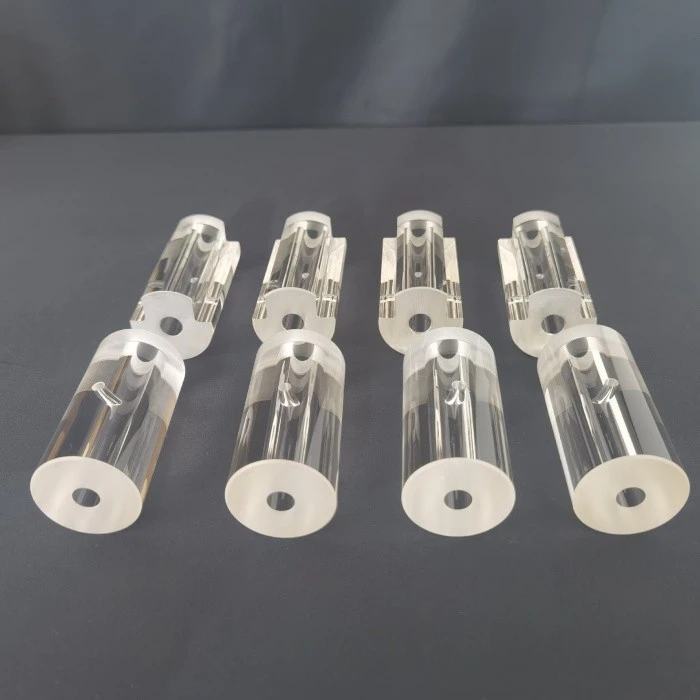
In conclusion, a Quartz Chamber can definitely be used in a plasma environment. It offers many advantages such as high - temperature resistance, chemical resistance, and electrical insulation. However, there are also some challenges that need to be addressed. With the right choice of quartz, proper control of plasma parameters, and regular maintenance, you can make the most of a Quartz Chamber in your plasma - related applications.
If you're interested in purchasing Quartz Chambers or any of our other quartz products for your plasma projects, feel free to reach out for a purchase negotiation. We're here to provide you with high - quality products and professional advice.
References
- "Quartz Glass: Properties and Applications" - A comprehensive guide on the properties and uses of quartz glass in various industries.
- "Plasma Physics and Technology" - A textbook that covers the basics of plasma physics and its applications, including the interaction between plasma and materials.