

Silica quartz rollers are widely used in various industries due to their excellent thermal stability, high strength, and chemical resistance. As a supplier of Silica Quartz Roller, I often receive inquiries about whether there are any do - it - yourself (DIY) ways to make these rollers. In this blog, I will explore the possibility of DIY silica quartz rollers, considering the materials, processes, and challenges involved.
Understanding Silica Quartz Rollers
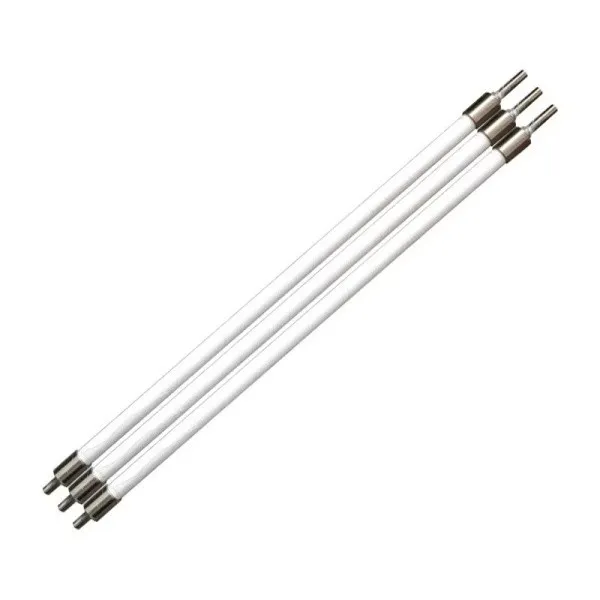
Silica quartz rollers are typically made from high - purity silica materials. Fused Silica Roller and Fused Silica Ceramic Roller are two common types. Fused silica is produced by melting high - purity silica sand at extremely high temperatures. These rollers are used in applications such as glass manufacturing, semiconductor processing, and heat treatment furnaces because of their ability to withstand high temperatures without significant deformation and their low coefficient of thermal expansion.
Materials Required for DIY
Silica Source
The first step in making a silica quartz roller is to obtain a suitable silica source. High - purity silica sand can be a starting point. However, it is crucial to ensure that the silica sand has a high silica content, usually above 99%. Impurities in the sand can affect the quality and performance of the final roller. You can source silica sand from specialized suppliers, but be aware that the purity requirements for industrial - grade silica quartz rollers are quite strict.
Binders and Additives
To shape the silica into a roller, binders and additives are often necessary. Binders help hold the silica particles together during the forming process. Organic binders such as cellulose - based materials can be used, but they need to be carefully selected to ensure that they burn off cleanly during the firing process without leaving residues that could contaminate the silica. Additives may also be used to improve the mechanical properties or the sintering behavior of the silica. For example, small amounts of metal oxides can be added to enhance the strength of the roller.
DIY Processes
Mixing
Once you have obtained the silica sand and the necessary binders and additives, the next step is to mix them thoroughly. This can be done using a mechanical mixer. The goal is to achieve a homogeneous mixture where the binders and additives are evenly distributed among the silica particles. The mixing time and speed need to be carefully controlled to ensure a good quality mixture.
Forming
There are several ways to form the mixed silica material into a roller shape. One simple method is to use a mold. You can create a cylindrical mold from materials such as metal or plastic. The mixed silica is then packed into the mold under pressure. Another option is to use extrusion. Extrusion involves forcing the mixed material through a die of the desired roller cross - section. This method can produce rollers with a more uniform shape and density.
Drying
After forming, the green (unfired) roller needs to be dried. Drying is a critical step as it helps remove the moisture from the binder and the silica mixture. If the drying process is too fast, cracks may form in the roller. Slow and controlled drying is usually recommended. You can dry the roller in a low - temperature oven or in a well - ventilated area at room temperature.
Firing
Firing is the most crucial and challenging step in making a silica quartz roller. The roller needs to be fired at a high temperature to sinter the silica particles together and form a dense and strong structure. For fused silica rollers, the firing temperature can reach up to 1700°C or even higher. Achieving and maintaining such high temperatures requires a specialized furnace. A muffle furnace or a tube furnace can be used, but they need to be capable of precise temperature control. During the firing process, the binder burns off, and the silica particles start to bond together through a process called sintering.
Challenges in DIY
Temperature Control
As mentioned earlier, firing at high temperatures is essential for making a quality silica quartz roller. However, achieving and maintaining the right temperature is extremely difficult in a DIY setting. Even small fluctuations in temperature can lead to uneven sintering, which can result in a roller with inconsistent properties. For example, if the temperature is too low, the silica particles may not sinter properly, leading to a weak and porous roller. On the other hand, if the temperature is too high, the roller may deform or develop cracks.

Purity and Contamination
Maintaining the purity of the silica during the DIY process is also a significant challenge. Any contact with contaminants during the mixing, forming, or firing process can degrade the quality of the roller. For example, dust in the air or residues from the equipment can introduce impurities into the silica. In industrial settings, strict clean - room conditions are often maintained to prevent contamination. In a DIY environment, it is almost impossible to achieve the same level of cleanliness.
Equipment Limitations
The equipment required for making a high - quality silica quartz roller is expensive and specialized. Most DIY enthusiasts do not have access to industrial - grade furnaces, mixers, and extrusion machines. The lack of proper equipment can limit the size, shape, and quality of the rollers that can be produced. For example, a small - scale furnace may not be able to heat the roller uniformly, resulting in a non - uniform structure.
Quality Assurance
Testing
Even if you manage to make a silica quartz roller through DIY methods, it is essential to test its quality. You can perform basic tests such as measuring the density, hardness, and thermal expansion of the roller. However, more advanced tests, such as those for chemical purity and high - temperature performance, may require specialized equipment and expertise. In industrial settings, quality control is a continuous process, and rollers are tested at multiple stages of production to ensure they meet the required standards.
Conclusion
While it is theoretically possible to make a silica quartz roller through DIY methods, it is extremely challenging. The high - temperature requirements, the need for high - purity materials, and the strict quality control standards make it difficult for DIY enthusiasts to produce rollers that are comparable to those produced in industrial settings. As a Silica Quartz Roller supplier, I recommend that for applications where high - performance rollers are required, it is best to source them from professional manufacturers.
However, if you are interested in experimenting with DIY projects related to silica quartz rollers for educational or hobby purposes, the steps outlined above can serve as a starting point. Just be aware of the limitations and challenges involved.
If you are in need of high - quality silica quartz rollers for your industrial applications, we are here to help. Our company offers a wide range of Fused Silica Roller and Fused Silica Ceramic Roller products that are manufactured using advanced technologies and strict quality control measures. Contact us to discuss your specific requirements and start a procurement negotiation.
References
- "Ceramics Processing and Sintering" by Randall M. German.
- "High - Temperature Materials and Their Applications" by Richard A. Rapp.
- Industry reports on silica quartz roller manufacturing and applications.