

Hey there! As a supplier of milky quartz crucibles, I often get asked, "Are milky quartz crucibles heat-resistant?" Well, let's dive right into this topic and find out.
First off, let's understand what milky quartz crucibles are. Milky quartz is a type of quartz that has a milky appearance due to tiny inclusions of gas or liquid within the crystal structure. Crucibles made from milky quartz are used in various industries, especially those involving high - temperature processes.
So, are they heat - resistant? The short answer is yes. Milky quartz has some pretty impressive heat - resistant properties. Quartz, in general, has a high melting point. The melting point of quartz is around 1713°C (3115°F). This means that milky quartz crucibles can withstand extremely high temperatures before they start to melt.
One of the reasons for this high heat resistance is the strong covalent bonds in the silicon - oxygen tetrahedra that make up the quartz structure. These bonds require a large amount of energy to break, which is why quartz can handle high - temperature environments.
In industrial applications, milky quartz crucibles are used in processes like metal melting, glass manufacturing, and semiconductor production. For example, in the semiconductor industry, they are used to hold molten silicon during the crystal - growing process. The high heat resistance of milky quartz crucibles ensures that they can maintain their shape and integrity even when exposed to the intense heat required to melt silicon, which has a melting point of about 1414°C (2577°F).
Another aspect of their heat resistance is their thermal shock resistance. Thermal shock occurs when a material is subjected to rapid changes in temperature. A good heat - resistant material should be able to withstand these sudden temperature changes without cracking or breaking. Milky quartz crucibles have relatively good thermal shock resistance. This is because quartz has a low coefficient of thermal expansion. When the temperature changes rapidly, the crucible doesn't expand or contract too much, reducing the risk of cracking.
However, it's important to note that while milky quartz crucibles are heat - resistant, they do have their limits. If the temperature exceeds their melting point or if the thermal shock is too extreme, they can still fail. For instance, if a milky quartz crucible is taken directly from a very high - temperature furnace and plunged into cold water, it might crack due to the sudden and extreme temperature change.
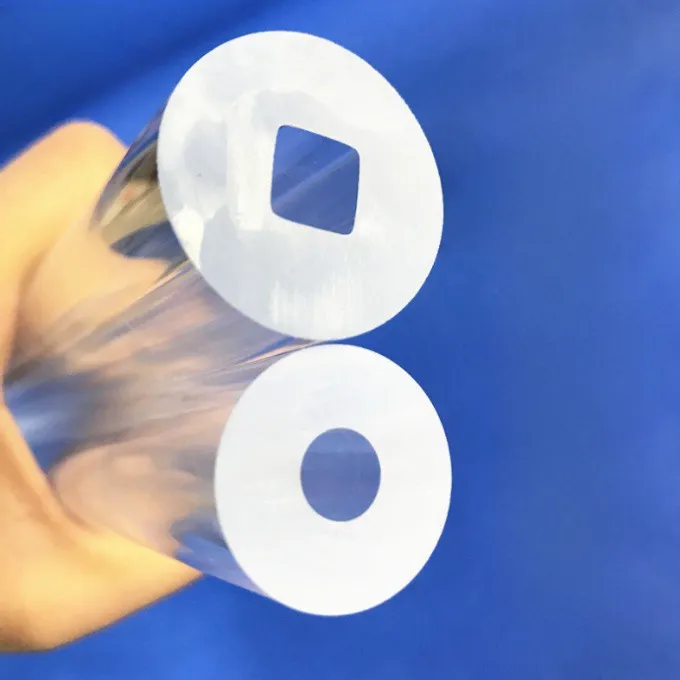
Now, let me tell you a bit about some related products. We also offer Quartz Ceramic Tube, Quartz Light Guide Rod, and Quartz Glass Tube. These products also have excellent heat - resistant properties and are widely used in different industries.
The quartz ceramic tube is known for its high - temperature stability and chemical resistance. It can be used in high - temperature furnaces and chemical reactors. The quartz light guide rod is used in applications where light needs to be transmitted efficiently, and it can withstand the heat generated during the light - transmitting process. The quartz glass tube is commonly used in laboratory equipment and lighting applications, and its heat - resistant nature makes it suitable for these uses.
If you're in an industry that requires heat - resistant materials, milky quartz crucibles could be a great choice for you. They offer a combination of high heat resistance, thermal shock resistance, and chemical stability. Whether you're melting metals, making glass, or producing semiconductors, our milky quartz crucibles can meet your needs.
If you're interested in learning more about our milky quartz crucibles or any of our other products, feel free to reach out for a procurement discussion. We're always happy to talk about how our products can fit into your specific processes and requirements.

References
- "Quartz: Properties and Applications" - A general reference on the properties of quartz and its various uses in industry.
- "High - Temperature Materials in Semiconductor Manufacturing" - A technical paper that discusses the use of heat - resistant materials like milky quartz crucibles in the semiconductor industry.